
From Desk to Calm

Stress Less, Move More, Work Better – From Anywhere

Category: Fresh Starts

  • Remote Work Job Search Checklist

    Remote Work Job Search Checklist

    Your Step-by-Step Roadmap to Remote Work Success

    Landing your first remote job without experience can feel overwhelming. You need to build the right skills and avoid scams. Standing out among hundreds of applicants is crucial. It’s easy to get lost in the process. That’s why I’ve created this comprehensive checklist that breaks down everything you need to do into manageable, actionable steps. Whether you’re just starting your remote work journey, this checklist will help you stay organized. Or you’ve been searching for months without success, it will still be beneficial. It will track your progress. It will ensure you’re not missing any critical steps. Think of it as your personal roadmap from “I want to work remotely” to “I just got hired.” Print it out. Check off each item as you complete it. Watch as your remote work dream becomes a systematic, achievable goal.

    Remote Work Job Search Checklist

    Pre-Application Setup ✅

    Skills & Experience Assessment

    • [ ] Completed comprehensive skills inventory
    • [ ] Translated past experiences into remote work language
    • [ ] Identified 2-3 key skills to develop further
    • [ ] Documented specific examples of independent work
    • [ ] Created list of achievements with quantifiable results

    Professional Online Presence

    • [ ] Updated LinkedIn profile with remote work focus
    • [ ] Added professional headshot photo
    • [ ] Optimized LinkedIn summary for remote opportunities
    • [ ] Added relevant skills to LinkedIn profile
    • [ ] Requested skill endorsements from connections
    • [ ] Set up professional email address if needed
    • [ ] Created basic portfolio website or document

    Workspace & Technical Setup

    • [ ] Designated specific work area in home
    • [ ] Tested internet speed (minimum 25 Mbps)
    • [ ] Ensured good lighting for video calls
    • [ ] Organized and decluttered workspace
    • [ ] Tested video calling software (Zoom, Teams, Google Meet)
    • [ ] Set up professional video call background
    • [ ] Taken photos of workspace for portfolio/LinkedIn

    Learning & Skill Development

    • [ ] Enrolled in at least one relevant online course
    • [ ] Completed basic software training for target roles
    • [ ] Practiced typing speed (aim for 40+ WPM)
    • [ ] Learned industry-specific tools or platforms
    • [ ] Obtained free certifications (Google, HubSpot, etc.)
    • [ ] Created work samples or portfolio pieces

    Job Search Strategy ✅

    Target Role Research

    • [ ] Identified 3-5 entry-level remote roles that match skills
    • [ ] Researched average salaries for target positions
    • [ ] Understood typical requirements for each role type
    • [ ] Found growth paths from entry-level positions
    • [ ] Identified transferable skills for each target role

    Company Research

    • [ ] Created list of 20-30 target companies
    • [ ] Researched company cultures and values
    • [ ] Identified remote-first vs. remote-friendly companies
    • [ ] Found employee reviews on Glassdoor
    • [ ] Checked company social media presence
    • [ ] Noted recent company news or developments
    • [ ] Identified key hiring managers or recruiters

    Application Materials

    • [ ] Created remote-work optimized resume
    • [ ] Written 3 different cover letter templates
    • [ ] Developed elevator pitch for remote work transition
    • [ ] Created work samples or portfolio pieces
    • [ ] Prepared list of professional references
    • [ ] Set up application tracking spreadsheet

    Daily Application Process ✅

    Before Applying to Each Job

    • [ ] Read job description thoroughly
    • [ ] Researched the specific company
    • [ ] Verified job posting legitimacy (not a scam)
    • [ ] Customized resume for specific role
    • [ ] Tailored cover letter to company and position
    • [ ] Identified how your skills match their needs
    • [ ] Found contact information for follow-up

    Application Submission

    • [ ] Applied through official company channels
    • [ ] Followed all application instructions exactly
    • [ ] Included all requested documents
    • [ ] Used professional email subject line
    • [ ] Saved copy of application for records
    • [ ] Updated tracking spreadsheet
    • [ ] Set calendar reminder for follow-up

    Post-Application

    • [ ] Connected with company employees on LinkedIn
    • [ ] Engaged with company social media content
    • [ ] Set follow-up reminder for 1 week
    • [ ] Prepared for potential phone/video screening
    • [ ] Researched additional company information

    Interview Preparation ✅

    Technical Setup

    • [ ] Tested internet connection stability
    • [ ] Verified video and audio quality
    • [ ] Downloaded/updated required software
    • [ ] Set up professional background or virtual background
    • [ ] Prepared backup communication method
    • [ ] Ensured quiet, distraction-free environment
    • [ ] Charged all devices and had chargers ready

    Content Preparation

    • [ ] Researched interviewer(s) on LinkedIn
    • [ ] Reviewed company website and recent news
    • [ ] Prepared answers to common remote work questions
    • [ ] Developed specific examples using STAR method
    • [ ] Prepared thoughtful questions about the role
    • [ ] Practiced explaining remote work transition
    • [ ] Reviewed job description and requirements again

    Documentation Ready

    • [ ] Copy of resume and cover letter
    • [ ] Portfolio or work samples
    • [ ] List of references with contact information
    • [ ] Notepad and pen for taking notes
  • Remote Jobs No Experience

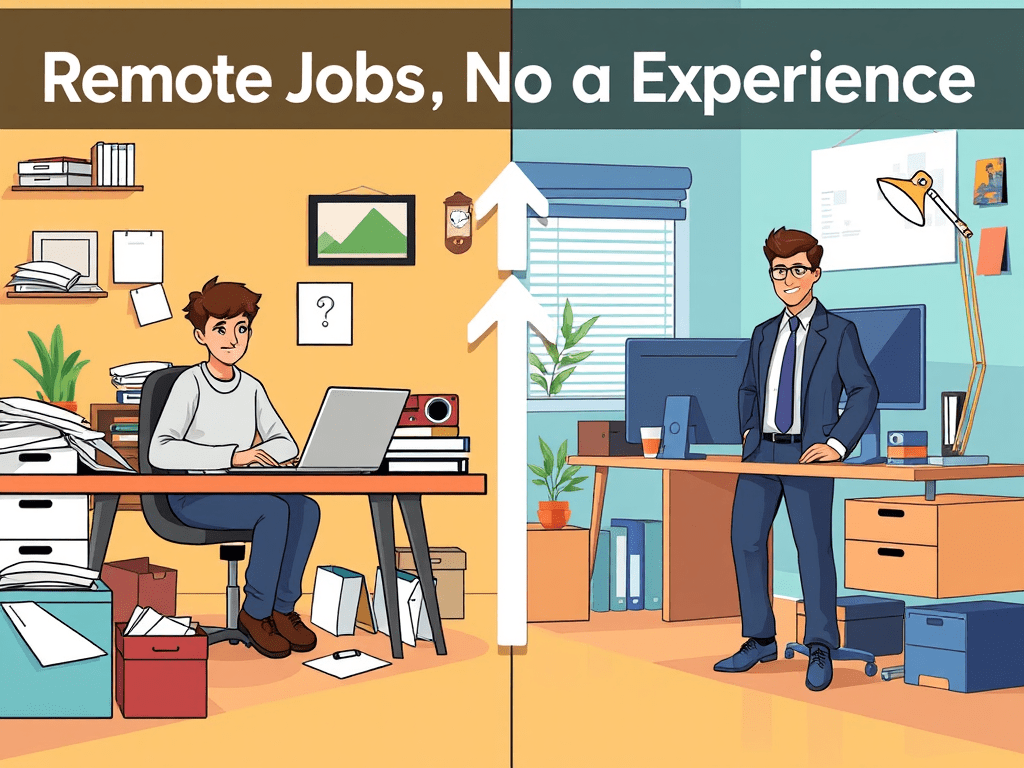
    Remote Jobs No Experience

    Hey there! 🌟

    Two years ago, I was scrolling through remote job boards at 2 AM, feeling completely defeated. Every posting seemed to want 3-5 years of experience, advanced certifications, or skills I’d never heard of. I had enthusiasm, a decent work ethic, and absolutely zero remote work experience to show for it.

    The worst part? I kept seeing the same advice everywhere: “Start freelancing to build your portfolio” or “Take on unpaid internships.” Easy to say when you need to pay rent next month, right?

    Then I met Marcus. He is a customer success manager. Marcus landed his first remote role just eight months after being laid off from retail management. No tech background. No fancy degree. No connections in his industry. Just a strategic approach to positioning himself as someone companies wanted to take a chance on.

    His story completely changed how I thought about breaking into remote work.

    The Truth About “No Experience” in Remote Work

    Here’s what Marcus taught me: When companies say they want “remote work experience,” they want candidates with varied remote backgrounds. They don’t want people who’ve only worked from home. They seek individuals who can work independently, communicate clearly, and deliver results without constant supervision.

    The problem isn’t that you lack experience. The issue is that you don’t know how to translate your existing skills into remote work language. Every job you’ve ever had has given you transferable skills. Every volunteer role has provided skills as well. Even managing your own life has contributed skills that remote employers desperately need.

    Companies hiring for entry-level remote positions care more about your potential and work style than your previous job titles. They just need proof that you can handle the unique challenges of working from home.

    4 Strategies to Position Yourself as Remote-Ready

    1. Audit Your Hidden Remote Skills

    You already have more remote-relevant experience than you think. Look for these transferable skills in your background:

    From any job:

    • Project management — Organizing events, coordinating schedules, meeting deadlines
    • Communication — Writing emails, presenting to groups, explaining complex topics
    • Problem-solving — Troubleshooting issues, finding creative solutions, working under pressure
    • Self-direction — Working independently, managing priorities, staying motivated

    From life experience:

    • Planning trips = project management and research skills
    • Managing household budgets = financial analysis and attention to detail
    • Coordinating family schedules = logistics and communication skills
    • Learning new hobbies = adaptability and self-directed learning

    Create a “skills inventory” document listing every capability you have, no matter how you gained it. This becomes your foundation for remote job applications.

    2. Build Proof of Remote Work Capabilities

    Since you can’t show remote work history, create evidence of remote work skills instead.

    Quick wins to demonstrate remote readiness:

    • Set up a professional workspace and take photos for your LinkedIn profile
    • Complete online courses relevant to your target roles (many are free)
    • Start a side project — blog, YouTube channel, small business, volunteer work
    • Document your self-directed learning through certificates, portfolios, or case studies
    • Practice video calls until you’re comfortable on camera

    Communication portfolio building:

    • Write LinkedIn posts about your learning journey
    • Create brief video introductions showcasing your communication skills
    • Offer to help local businesses with their social media or admin tasks
    • Join online communities in your field and contribute valuable comments

    3. Target Entry-Level Remote-Friendly Roles

    Some roles are naturally easier to break into remotely. Focus your search on positions that:

    High-demand, entry-level remote roles:

    • Customer service representative — Most companies offer training
    • Virtual assistant — Wide range of tasks, flexible skill requirements
    • Content moderator — Social media platforms constantly hiring
    • Data entry specialist — Detail-oriented work that’s easy to train
    • Online tutor or teacher — If you have expertise in any subject
    • Social media assistant — Great for digital natives
    • Sales development representative — Many companies train from scratch

    Industries actively hiring remote beginners:

    • SaaS and tech companies (customer success, support)
    • E-commerce businesses (operations, customer service)
    • Digital marketing agencies (assistant roles, content creation)
    • Online education platforms (support, community management)
    • Remote-first startups (various entry-level positions)

    4. Master the Remote Job Application Process

    Apply differently than you would for traditional jobs. Remote employers evaluate candidates through a different lens.

    Application strategy that works:

    • Customize every application — Show you understand their specific remote work challenges
    • Lead with your why — Explain your genuine interest in remote work beyond convenience
    • Address the experience gap directly — “While I’m new to remote work, I’ve demonstrated [specific skill] through [concrete example]”
    • Show initiative — Mention courses you’ve taken, tools you’ve learned, or preparations you’ve made

    Stand-out application elements:

    • Include a brief video introduction (30-60 seconds)
    • Create a simple portfolio website showcasing your skills
    • Write a thoughtful cover letter addressing their specific needs
    • Follow up professionally but not aggressively
    • Be prepared for skills-based assessments or trial projects

    Your 30-Day Remote Job Search Plan

    Week 1: Foundation Building

    • Complete your skills inventory
    • Set up your workspace and take professional photos
    • Update LinkedIn profile with remote work focus
    • Research 10 companies you’d love to work for

    Week 2: Skill Development

    • Enroll in 2-3 relevant online courses
    • Start a small project to showcase your abilities
    • Join industry-specific online communities
    • Practice video calls with friends or family

    Week 3: Application Preparation

    • Create your portfolio website or document
    • Write 3 different cover letter templates
    • Prepare for common remote work interview questions
    • Set up job alerts for entry-level remote positions

    Week 4: Active Job Searching

    • Apply to 10-15 positions per week
    • Follow up on applications from previous weeks
    • Network in online communities
    • Refine your approach based on responses

    Your Challenge This Week 🎯

    Choose one entry-level remote role that interests you and spend one hour researching:

    • What skills do job postings repeatedly mention?
    • What tools or software do they commonly use?
    • What challenges will someone in this role face?
    • How can you start building relevant experience now?

    Then take one concrete action toward building that experience. Sign up for a free course. Download the software to practice. Alternatively, reach out to someone doing that job for advice.

    What type of remote work are you most interested in pursuing? Are there specific skills you’re worried about not having, or companies you dream of working for?

    Hit me up in the comments and let me know. I love helping people navigate their path into remote work. Sometimes, an outside perspective can spot opportunities you might be missing.

    Here’s to proving that passion and preparation can open doors that experience alone will not.

    Talk soon, Tim

    P.S. Remember: every expert was once a beginner. The remote workers you admire today all started somewhere, and many of them started exactly where you are now. Your fresh perspective and eagerness to learn might be exactly what the right company is looking for. 🚀

    Get my Remote Work Job Search Checklist HERE

  • Tech-Free Hobbies for Better Mental Wellness

    Tech-Free Hobbies for Better Mental Wellness

    Hey there! 🌱

    Last Saturday, I caught myself doing something surprising. My teenage self would have been horrified. I was genuinely excited about pulling weeds.

    There I was. Dirt under my fingernails. Sweat on my forehead. I was completely absorbed in clearing out the overgrown corner of my garden. I was listening to a podcast on my airpods. No notifications buzzing. No tabs open in my brain. Just me, the earth, and the satisfying pop of dandelions coming up by the roots.

    When I finally looked up, two hours had passed without me checking my phone once. I felt… lighter. Like I’d been holding my breath for months and could finally exhale.

    That’s when it hit me: I couldn’t remember the last time I’d felt that present.

    The Screen-Free Awakening

    Over the past few months, I’ve intentionally sought out tech-free hobbies. I’ve discovered our brains are starving for activities that don’t involve screens. We don’t even realize it.

    After years of remote work, endless scrolling, and digital everything, I started noticing some troubling patterns. My attention span was shot. I felt restless even during “relaxing” activities like watching Netflix. My hands felt twitchy whenever I wasn’t holding a device.

    Sound familiar?

    Reading, sports, and gardening consistently rank among the most popular hobbies globally, and there’s a reason for that. These offline activities give our minds something our digital lives simply can’t: genuine restoration.

    4 Categories of Tech-Free Hobbies That Actually Help

    1. Hands-On Creative Activities

    There’s something magical about creating something physical with your hands. Your brain shifts into a completely different gear.

    Popular options to try:

    • Knitting or crocheting — repetitive motions that calm anxiety. My daughter creates the most amazing creations just sitting watching tv.
    • Pottery or ceramics — working with clay is surprisingly meditative
    • Woodworking — building something tangible feels incredible. I have a small wood shop in my garage. My wife and I have built beds, garden boxes, and even a dining room table there.
    • Cooking or baking — engaging all your senses while creating something delicious
    • Jewelry making — perfect for detail-oriented minds

    The key is choosing something that requires just enough focus to quiet your inner chatter. It should not require so much focus that it becomes stressful.

    2. Movement-Based Hobbies

    Dancing can have significant brain benefits. Research shows this to be true. Social dancing is particularly effective for cognitive health. But you don’t need to become a professional dancer to reap the benefits.

    Try these:

    • Hiking or nature walking — movement plus fresh air is unbeatable
    • Dancing — whether it’s salsa lessons or just dancing in your living room
    • Gardening — surprisingly physical and incredibly grounding
    • Yoga or tai chi — movement that connects body and mind
    • Sports — tennis, basketball, or even just shooting hoops

    The goal isn’t to become an athlete. It’s to get your body moving in ways that feel good and break you out of the sedentary screen cycle.

    3. Mindful Learning Activities

    These hobbies engage your brain in focused, intentional ways that are the opposite of doom-scrolling.

    Consider:

    • Reading physical books — the tactile experience changes everything
    • Learning a musical instrument — piano, guitar, or even a ukulele
    • Puzzles — jigsaw puzzles, crosswords, or Sudoku
    • Board games — with friends or family for added connection
    • Journaling or creative writing — pen to paper, not fingers to keyboard

    These activities train your brain to focus deeply on one thing at a time — a skill that digital life actively erodes.

    4. Connection-Based Hobbies

    Some of the most restorative offline activities involve connecting with others face-to-face.

    Ideas to explore:

    • Volunteering — helping others while building community
    • Hosting dinner parties — cooking for friends combines creativity and connection
    • Joining clubs — book clubs, hiking groups, or hobby meetups
    • Family activities — travel, camping, or even regular game nights
    • Community sports — joining a local league or pickup games

    Offline hobbies are particularly crucial for remote workers. They help enforce work boundaries. These hobbies provide essential mental breaks from screen time.

    Getting Started: Your 3-Step Tech-Free Plan

    Step 1: Audit Your Current “Relaxation”

    Look at how you currently spend your downtime. If most of it involves screens, it’s time to experiment with something different.

    Step 2: Start Small and Simple

    Don’t try to become a master gardener overnight. Start with:

    • A single houseplant to care for
    • A 15-minute walk without your phone
    • One book you’ve been meaning to read
    • A simple recipe you want to try

    Step 3: Notice How You Feel

    Pay attention to your energy levels, sleep quality, and overall mood after engaging in offline activities. The benefits might surprise you.

    Your Challenge This Week 🎯

    Choose one tech free hobby from the list above and commit to trying it for just 30 minutes this week. Not every day — just once.

    Maybe it’s picking up that book that’s been sitting on your nightstand. Maybe it’s taking a walk around your neighborhood without your phone. Maybe it’s finally trying that recipe you bookmarked months ago.

    The goal isn’t to find your lifelong passion immediately. It gives your brain a break from the constant digital stimulation. You will remember what it feels like to be fully present.

    What offline activity have you been curious about but haven’t made time for? Hit the comments below and let me know. I love hearing about people’s rediscovered hobbies. I am also interested in the unexpected ways they’ve changed their daily routines.

    Here’s to dirty fingernails, sore muscles, and the kind of tiredness that comes from doing something real with your hands.

    Talk soon, Tim.

    P.S. If you’re feeling overwhelmed, remember that adding “one more thing” to your schedule isn’t necessary. Tech-free hobbies aren’t about productivity. They’re about restoration. Sometimes the most productive thing you can do is step away from trying to be productive. 🌿