From Desk to Calm

Stress Less, Move More, Work Better – From Anywhere

Tag: lifestyle

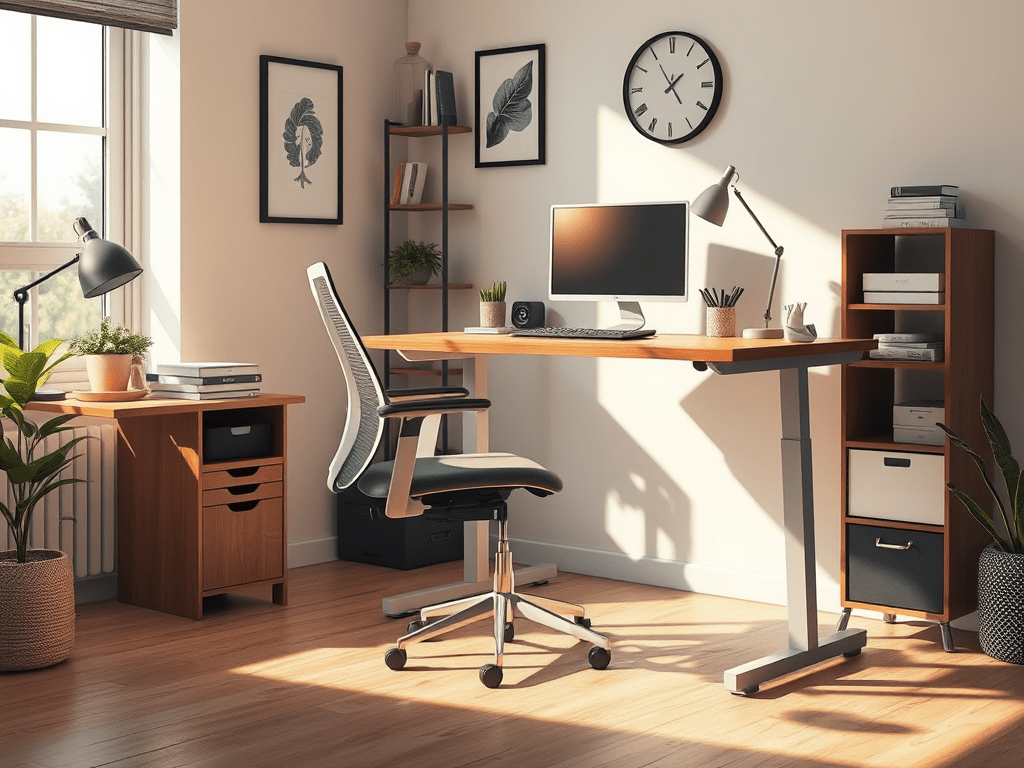
  • A Comprehensive Guide to Creating an Ergonomic Desk Setup for Under $100

    A Comprehensive Guide to Creating an Ergonomic Desk Setup for Under $100

    Comfort Matters

    Hi friend 👋,

    Let me guess — you’re probably reading this from a desk (or maybe your kitchen table, or worse… your couch). I’ve been there too. When I first started working remotely, I believed I could settle for any chair and table available at home. A few weeks in, though, my back and neck ached. My wrists were stiff. I felt more drained than I did at the office.

    That was my wake-up call: comfort matters. I started shopping for “ergonomic” gear, but the price tags were intimidating. There were $400 chairs and $300 standing desks. There were also gadgets I wasn’t sure I really needed. So I set myself a challenge: could I build an ergonomic desk setup for under $100? Spoiler alert: yes. And it completely changed the way I work from home.

    Step-by-Step Guide

    This post is my step-by-step guide. It will help you do the same. You’ll save your body, your energy, and your wallet. This post is my guide to help you save. It will preserve your body, your energy, and your wallet.

    Table of Contents

    Why Ergonomics Matter in Remote Work

    Working from home gives us freedom — but it also comes with hidden costs if we’re not intentional. Poor posture and bad setups lead to remote work burnout. Surveys show that nearly 70% of remote workers report new or worsening musculoskeletal pain since shifting to home offices.

    Ergonomics isn’t just about comfort; it’s about energy. When your screen is too low, your neck strains. When your chair doesn’t support you, your back compensates. These small stressors build up, draining focus and leaving you exhausted by 3 PM. A proper desk setup helps your body align naturally, reduces fatigue, and boosts long-term health — no chiropractor bills required.

    The best part? You don’t need a thousand-dollar setup to feel the difference. With creativity and a few smart purchases, you can transform your workspace on a budget.

    Step 1: Upgrade Your Seating (Without Buying a New Chair)

    You don’t need to buy an expensive ergonomic chair. Instead:

    • Lumbar pillow substitute: Roll up a towel or use a small cushion behind your lower back. Cost: $0.
    • Seat cushion: A memory-foam cushion (around $25 on Amazon) distributes weight evenly and keeps your hips comfortable.
    • Chair height hack: If your chair is too low, place a firm cushion beneath you. If too high, add a footrest (a sturdy shoebox works).

    Step 2: Elevate Your Screen

    Your screen should be at eye level so you’re not constantly looking down.

    • Laptop stand alternative: Use stacked books or a sturdy box to raise your laptop. Cost: $0.
    • Budget stand option: Adjustable laptop stands start around $20 and are worth the small investment.
    • Extra tip: If you can, pair it with an external keyboard and mouse (see below).

    Step 3: Support Your Wrists and Hands

    • Typing all day on a flat laptop keyboard puts pressure on your wrists.
    • Take breaks: Every 20 minutes, shake out your hands to keep circulation flowing.
    • External keyboard and mouse: Basic wired versions cost under $30. This instantly improves wrist posture.
    • DIY wrist rest: Fill a sock with rice or beans and stitch the end. It cushions your wrists for free.

    Step 4: Light the Space Wisely

    Good lighting reduces eye strain and keeps your brain alert.

    • Desk lamp with warm light: Around $15–20. Position it opposite your dominant hand to avoid shadows.
    • Natural light hack: If possible, place your desk perpendicular to a window.
    • Blue light filter: Free software like f.lux adjusts screen color to reduce strain in the evenings.

    Step 5: Add Movement and Micro-Breaks 🙌

    Ergonomics isn’t just furniture — it’s movement.

    • Pomodoro breaks: Every 25–30 minutes, stand up, stretch, or walk around.
    • Standing desk hack: Place your laptop on a high counter for short standing sessions. Cost: $0.
    • Stretch reminders: Set a timer or use free apps like Stretchly to keep your body moving.

    Your Challenge This Week

    I want you to try just one of these upgrades today. Maybe it’s stacking your laptop on a few books, or adding a pillow behind your back. Notice how different your body feels at the end of the day.

    If you’ve been struggling with remote work burnout, try making this small shift. It can be the first step toward a calmer, more energized workday.

    👉 Share your desk setup or your favorite budget hack in the comments — I’d love to hear from you. Do you want more guides like this? Subscribe to the newsletter. You can also explore other resources at From Desk to Calm.

    Until next time, take care of your back, your wrists, and your energy. You deserve it.

    Tim

    P.S. Fun fact: Ernest Hemingway famously wrote standing up. Maybe he was the original ergonomics hacker 😉

  • Remote Work and Productivity: The Truth About Getting Things Done From Home

    Remote Work and Productivity: The Truth About Getting Things Done From Home

    Hey there! 🏠

    Three months into working remotely, I was convinced I was broken. By 3 PM every day, I would be staring at my laptop screen with limited focus. I had accomplished maybe half of what I used to get done in the office. My to-do list kept growing. My energy kept shrinking. I started wondering if I was just one of those people who “wasn’t cut out” for remote work.

    Then I had coffee with my neighbor Jake, a software developer who’d been working from home for five years. When I confessed my productivity struggles, he laughed. He then said something that changed everything: “You’re trying to recreate your office life at home. Instead, you should design a system that actually works for how your brain functions.”

    He was right. I’d been fighting against my natural rhythms instead of working with them.

    The Productivity Paradox of Remote Work

    Here’s what nobody tells you about remote work and productivity: Strategies that made you successful in an office might not work at home. The environment and distractions at home are different. These strategies can actually sabotage your effectiveness. The environment is different. The distractions are different. Most importantly, your relationship with work becomes fundamentally different when your bedroom is 20 feet from your desk.

    Research shows that remote workers can be 13-50% more productive than their office counterparts. This is only true when they’ve learned to work with their home environment instead of against it. The key isn’t discipline or willpower — it’s understanding that productivity at home requires a completely different playbook.

    The most successful remote workers I know aren’t the ones who can focus for 8 straight hours. They’re the ones who’ve figured out how to maximize their peak energy windows and work around their natural productivity patterns.

    4 Game-Changing Strategies for Remote Work Productivity

    1. Map Your Natural Energy Cycles

    This was the biggest breakthrough in my remote work journey. I decided not to force myself into a 9-to-5 schedule. I tracked my energy levels for two weeks. During this time, I discovered some surprising patterns.

    How to find your peak productivity windows:

    • Track your energy levels every hour for one week
    • Note when you feel most alert, creative, and focused
    • Find your natural “crash” times
    • Pay attention to how different activities affect your energy

    What I discovered about myself:

    • Peak focus: 9-11 AM and 2-4 PM
    • Creative work best: Early morning
    • Administrative tasks: Right after lunch when energy dips
    • Meetings: Late morning when I’m alert but not in deep focus mode

    Once I started scheduling my hardest work during my natural peak times, my productivity doubled. I stopped fighting my 3 PM energy crash and started planning easier tasks for that time instead.

    2. Create “Activation Rituals” for Different Types of Work

    Working from home means you’re constantly switching between different modes — focused deep work, collaborative meetings, administrative tasks, creative projects. Each requires a different mental state. The key is having specific rituals that signal to your brain what mode you’re entering.

    Deep Focus Ritual:

    • Clear your desk completely
    • Put your cell phone in another room
    • Use noise-canceling headphones with instrumental music
    • Set a specific time limit (usually 90-120 minutes)
    • Have water and snacks ready so you don’t need to break focus

    Creative Work Ritual:

    • Change your physical location (different chair, standing desk, sometimes the couch)
    • Make a cup of tea instead of coffee. I prefer green tea and peppermint
    • Open a physical notebook for brainstorming. I am Gen X so I still like to use pen and paper but you do you
    • Put on more upbeat background music. For me its drum and base or 80’s new wave

    Meeting Preparation Ritual:

    • Review agenda and participant list 5 minutes before
    • Stand up and do light stretching
    • Check audio/video quality
    • Have pen and paper ready for notes

    These might seem small, but they create psychological transitions that help me show up differently for different types of work.

    3. Design Your Environment for Success, Not Just Comfort

    The biggest mistake I made early on was creating a home office that felt cozy rather than energizing. Comfort can actually be productivity’s enemy when it makes you too relaxed to maintain focus and drive.

    Environmental factors that boost productivity:

    • Natural light exposure — Position your workspace near a window or use a daylight lamp
    • Temperature control — Slightly cool 68-70°F (or 20-21°C for my Canadian friends) tends to increase alertness
    • Visual cues — Keep inspiring quotes, goals, or project visuals visible
    • Organization systems — Everything should have a specific place
    • Separation — Clear physical boundaries between work and relaxation areas

    The “energy audit” exercise: Walk into your workspace. Honestly assess: Does this environment make you feel energized and ready to tackle challenges? Or does it make you want to curl up and take a nap? Adjust accordingly.

    4. Master the Art of Strategic Breaks

    Remote work productivity isn’t about grinding through 8 straight hours — it’s about managing your energy like a renewable resource. The most productive remote workers are strategic about when and how they recharge.

    Types of breaks that actually restore energy:

    Micro-breaks (5 minutes every hour):

    • Stand and stretch
    • Look out a window at something far away
    • Do breathing exercises
    • Quick walk around the house

    Movement breaks (15 minutes every 2-3 hours):

    • Walk outside, even briefly
    • Do jumping jacks or push-ups
    • Dance to one favorite song
    • Yoga stretches

    Mental reset breaks (30 minutes mid-day):

    • Eat lunch away from your workspace
    • Call a friend or family member
    • Read something completely unrelated to work
    • Take a short walk in nature

    Recovery breaks (when you hit a wall):

    • 20-minute power nap if possible
    • Meditation or mindfulness practice
    • Change of scenery (work from a coffee shop)
    • Physical exercise to reset energy

    The key is being proactive about breaks rather than reactive. Take them before you feel depleted, not after.

    Building Your Personal Productivity System

    Week 1: Assessment

    • Track your energy patterns throughout each day
    • Note what environments and conditions help you focus best
    • Identify your biggest productivity challenges and distractions
    • Document when you do your best work

    Week 2: Experimentation

    • Try working during your identified peak energy windows
    • Test different environmental setups (lighting, music, temperature)
    • Experiment with various break schedules
    • Create one activation ritual for your most important work

    Week 3: Refinement

    • Double down on what’s working
    • Adjust or eliminate strategies that aren’t helping
    • Add one new productivity technique
    • Start tracking your daily accomplishments

    Week 4: Integration

    • Create consistent daily routines around your discoveries
    • Set up systems to maintain your most effective practices
    • Plan for obstacles and have backup strategies ready
    • Celebrate what’s working and plan next improvements

    Your Challenge This Week 🎯

    Choose one strategy from this post and commit to testing it for five straight days:

    Maybe it’s mapping your energy cycles by tracking how you feel every hour. Maybe it’s creating your first activation ritual for deep focus work. Maybe it’s redesigning one aspect of your workspace to be more energizing.

    Don’t try to overhaul everything at once. Pick one area where you’re struggling most and experiment with solutions.

    What’s your biggest remote work productivity challenge right now? Is it staying focused, managing energy throughout the day, or something else entirely?

    Hit up the comments and let me know. I love hearing about what people are struggling with. I also enjoy hearing about what’s working for them. Sometimes an outside perspective can spot solutions you might miss.

    Here’s to discovering that productivity at home isn’t about working harder, but about working smarter with your natural patterns.

    Talk soon, Tim

    P.S. Remember: there’s no “perfect” productivity system that works for everyone. The best system is the one you’ll actually use consistently. Start small, be patient with the process, and focus on progress over perfection. 🌟

  • Daily Routines of High-Performing Remote Workers

    Daily Routines of High-Performing Remote Workers

    Hey there! ⭐

    I used to think the most productive remote workers were the ones posting LinkedIn updates at 5 AM. They wrote about their “morning grind” and color-coded calendars. You know the type — up at dawn, green smoothie in hand, crushing goals before most people hit snooze.

    Then I actually started talking to people who consistently deliver exceptional work from home, and I was shocked. The highest performers I met weren’t necessarily early risers or productivity hackers. But they all had one thing in common: rock-solid daily routines that worked with their natural rhythms, not against them.

    Take CJ, a project manager who mentored me early in my remote work journey. I was struggling to fit into a traditional 9-to-5 schedule. I also felt guilty about my afternoon energy crashes. Meanwhile, CJ was quietly revolutionizing how I thought about productivity. He started work at 10 AM, took genuine lunch breaks, and wrapped up by 4 PM sharp. Yet his project delivery rate was unmatched, and his team consistently hit every deadline. His secret? He’d designed his remote work routines entirely around his peak energy windows instead of fighting against his natural rhythms.

    What High Performance Really Looks Like

    After studying dozens of top-performing remote workers, I made a surprising discovery. Success isn’t about having the “perfect” daily schedule when working from home. It’s about having consistent systems that create predictable outcomes.

    The most productive remote workers don’t wing it. They don’t rely on motivation or willpower. Instead, they’ve built productive habits remote workers can depend on, regardless of how they feel on any given day.

    These aren’t complicated systems or time-tracking apps. They’re simple, sustainable routines that create structure in an environment where structure doesn’t naturally exist.

    4 Essential Elements of High Performance Routines

    1. The Protected Morning Window

    Every high-performing remote worker I studied guards their first 1-2 hours fiercely. But here’s the twist: what they do during this time varies dramatically.

    Some common approaches:

    • The Early Bird: Up at 6 AM for exercise, journaling, and strategic planning
    • The Slow Ramp: Gentle morning routine with coffee, reading, and gradual work entry
    • The Power Start: Immediate dive into the day’s most important task
    • The Preparation Ritual: Review schedule, set intentions, organize workspace. This is my most important approach.

    The key isn’t the specific activity — it’s that this time belongs to them, not their inbox or urgent requests. High performers use this window to set their day’s tone rather than react to everyone else’s priorities.

    2. Strategic Deep Work Blocks

    Productive remote workers have figured out when their brain works best and ruthlessly protect those hours.

    How they structure focus time:

    • Time blocking: Dedicated 2-3 hour chunks for challenging work
    • Theme days: Mondays for strategy, Tuesdays for creation, etc.
    • Peak energy mapping: Scheduling hardest tasks during natural energy highs
    • Communication boundaries: Specific hours for emails/meetings vs. solo work. Simple and effective but somewhat elusive for some.

    They don’t try to do deep work all day. Instead, they identify their 3-4 peak hours and build their entire schedule around protecting them.

    3. Intentional Break Architecture

    This was the biggest surprise: high-performing remote workers are strategic about their breaks, not just their work time.

    Effective break patterns I observed:

    • Micro-breaks: 5-minute walks between tasks
    • Movement breaks: Stretching, yoga, or quick workouts every 2 hours
    • Nature breaks: Stepping outside, even briefly, during the day
    • Social breaks: Quick calls with colleagues or family members
    • Creative breaks: Playing an instrument, doodling, or other non-work activities

    They don’t see breaks as “time off” — they see them as fuel for sustained high performance.

    4. The Shutdown Ritual

    Every high performer has a clear end-of-workday routine that signals to their brain: “Work is done.”

    Common shutdown elements:

    • Task capture: Writing down tomorrow’s priorities. I personally look at the next days schedule to help with this.
    • Workspace clearing: Organizing desk and closing programs. In my case, I collect all my post it notes and doodles.
    • Transition activity: Exercise, cooking, or family time
    • Gratitude practice: Reflecting on the day’s wins. I record these for my weekly summary to my boss.
    • Physical boundary: Closing laptop, leaving office, changing clothes. Most days I head right to my garage to grab my lawn mower, of pull some weeds. Its all about clearing my head.

    This isn’t about stopping at a specific time (though many do). It’s about creating a clear psychological transition from work mode to personal mode.

    Building Your High Performance Routine

    Start With Your Energy, Not Your Schedule

    Before you design your routine, track your energy for one week:

    • When do you feel most alert and creative?
    • What time of day do you naturally start to fade?
    • When are you most easily distracted?
    • What activities give you energy vs. drain it?

    Use this data to design your ideal daily structure.

    Design Your Non-Negotiables

    High performers typically have 3-5 non-negotiable elements that happen every workday:

    • A specific morning routine (even if it’s just 10 minutes)
    • One protected deep work block
    • A real lunch break away from screens. I have it blocked off in my calendar yet people still send meeting requests 😱
    • Some form of movement
    • A clear work shutdown

    Start with just 2-3 elements and build from there.

    Create Flexibility Within Structure

    The best remote work routines have consistent frameworks but flexible details. For example:

    • Always exercise in the morning, but vary the activity
    • Always have a shutdown ritual, but adjust timing based on workload
    • Always protect deep work time, but shift the hours as needed

    Test and Adjust Weekly

    High performers treat their routines like experiments. They try something for a week, assess how it felt, and make adjustments. They’re not married to any particular approach — they’re married to the process of continuous improvement.

    Your Challenge This Week 🎯

    Pick one element from the high performance routines and commit to testing it for five days:

    • Design a 15-minute morning routine
    • Block out 2 hours for deep work daily
    • Take three intentional breaks each day
    • Create a simple shutdown ritual

    Don’t try to overhaul your entire day. Just experiment with one piece and notice how it affects your energy, focus, and overall satisfaction with your work.

    What does your current remote work routine look like? Are there patterns that serve you well, or areas where you feel like you’re constantly playing catch-up?

    Hit me up in the comments — I’m curious about what routines you’ve tried and what’s worked (or hasn’t worked) for you.

    Here’s to building systems that make success feel less like luck and more like inevitability.

    Talk soon, Tim

    P.S. Remember: the best routine is the one you’ll actually stick to. Don’t aim for perfection — aim for consistency. Small, sustainable changes compound into remarkable results over time. 🚀

  • Mastering Work-Life Balance: Boundaries That Actually Work

    Mastering Work-Life Balance: Boundaries That Actually Work

    When Home Becomes Office: Reclaiming Your Space and Sanity

    Your bedroom became your boardroom. Your kitchen table turned into your desk. When everything is your office, nothing feels like home.

    If you’ve been working remotely, you know exactly what I’m talking about. We thought we’d hit the jackpot—no commute, no office drama, working in pajamas. But somewhere along the way, something went wrong. Our homes stopped feeling like… well, home.

    What We Lost Without Realizing It

    Here’s the thing nobody talks about: that daily commute we all complained about? It was actually doing us a favor. Those twenty minutes in the car or on the train weren’t just transportation—they were transformation time. Your brain had space to shift from “work mode” to “home mode.”

    Remote work erased the commute—and with it, the natural transition between work and life. Without boundaries, burnout becomes inevitable.

    Now? You finish a stressful video call and immediately have to help your kids with homework at the same kitchen table. You close your laptop at 5 PM but it’s sitting right there, practically whispering about tomorrow’s deadlines. Your couch holds memories of both Netflix binges and anxiety-inducing client calls.

    When every space becomes a workplace, where do you go to actually relax?

    The Real Cost of Always Being “On”

    I’ve watched friends become shells of themselves because they couldn’t turn off. Sarah can’t watch TV in her living room anymore without thinking about morning presentations. Mark checks Slack at midnight because his work phone doubles as his personal phone.

    It’s not sustainable. When your brain can’t find a true “off” switch, everything suffers—your work, your relationships, your mental health.

    Boundaries That Actually Work

    Creating real work-life separation at home isn’t about having a fancy office (though that’s nice). It’s about training your brain to understand when you’re working and when you’re living.

    Set Non-Negotiable Office Hours

    • Pick your hours and stick to them religiously
    • Put them in your email signature
    • Block personal time on your calendar like it’s a client meeting
    • Communicate them clearly to everyone—including yourself
    • Create Physical Transition Rituals
    • Morning: Special coffee routine before opening the laptop
    • Evening: Close laptop with an audible snap, change clothes
    • Take a “fake commute” walk around the block
    • Use specific music playlists to signal work start/stop

    My Wake-Up Call

    A few years back, when I was working on company special projects, I completely lost control. Twelve-hour days became normal. I answered emails during dinner. I took calls on weekends. Worst of all, I was doing it all from our dining room table.

    The breaking point? My wife pointed out that I’d taken three work calls during our weekly dinner date. At our own table. The place that used to be where we talked about our day had become just another conference room.

    That night, I made a rule: 5 PM hard stop. Every single day.

    Here’s what that looked like:

    • Close laptop with an audible snap
    • Change out of work clothes (yes, even at home)
    • Take a 10-minute walk around the neighborhood No exceptions, no “just five more minutes”

    The first week was brutal. My brain kept trying to pull me back to work. But by week two, something clicked. That laptop snap became a Pavlovian signal. The clothing change helped me shed the work mindset. The walk became my decompression time.

    Within a month, our dining room felt like home again. My evenings were actually mine. And here’s the kicker—I became better at my job because I was truly rested when I started each day.

    The Ripple Effect

    Good boundaries don’t just save your sanity—they make you better at everything. When you’re genuinely off during personal time, you return to work sharper and more creative. When home feels like a sanctuary again, your stress drops and your relationships improve.

    You also set an example. Remote work is still evolving, and we’re all figuring this out together. When you protect your boundaries, you give others permission to do the same.

    Start Small, Stay Consistent

    You don’t need to overhaul your entire life tomorrow. Pick one boundary and commit to it for two weeks. Maybe it’s the 5 PM laptop closure. Maybe it’s keeping your phone out of the bedroom. Maybe it’s a morning coffee ritual that signals work time.

    The key is consistency. Your brain needs repetition to learn new patterns.

    Your home should feel like home, not like an office you can never escape. With intentional boundaries and simple rituals, you can reclaim your space and your sanity—one small change at a time.

    Because at the end of the day, work is what you do, not where you live.

    If you have read to the bottom of this post I would just like to say thanks. I started this blog to get my thoughts on paper and have always harbored a secret ambition to be a writer and thank you for allowing me to indulge my passion.