From Desk to Calm

Stress Less, Move More, Work Better – From Anywhere

Tag: Mental health at work

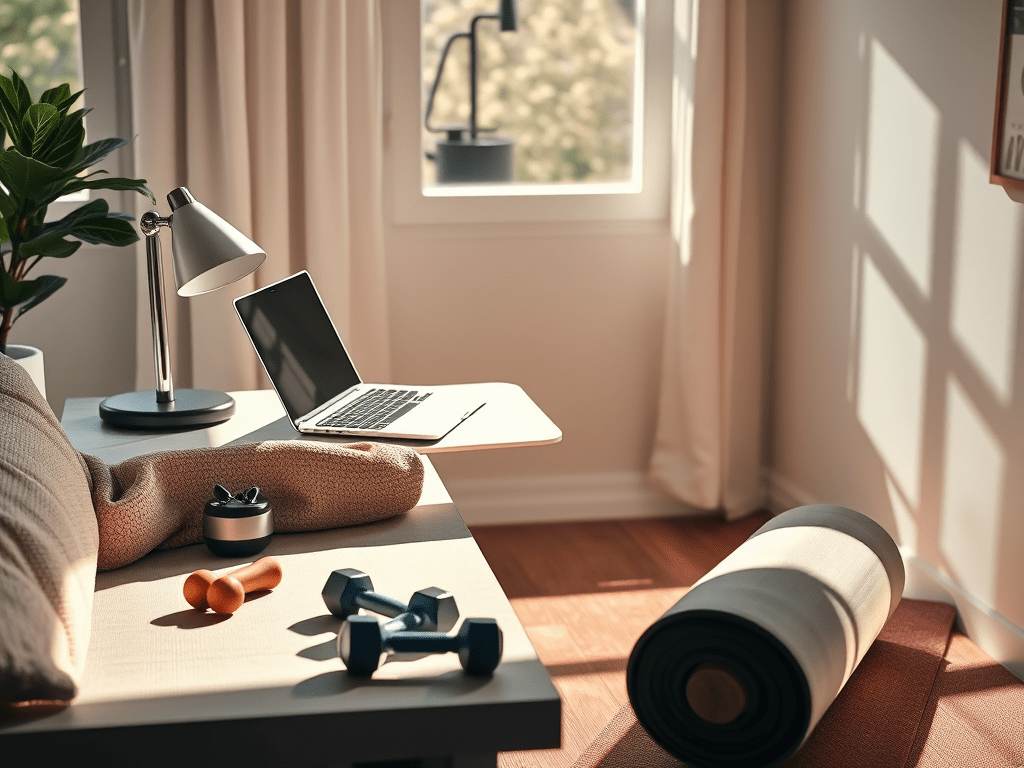
  • The Ultimate Guide to Staying Fit While Working from Home

    The Ultimate Guide to Staying Fit While Working from Home

    Hey friend,

    I recently learned a startling fact. It made me rethink how I spend my workdays. Spending long hours seated each day could be putting your heart at risk, even if you’re diligent about regular exercise. A recent study highlights that sitting for more than 10.6 hours daily is strongly associated with a higher risk of heart failure. It further indicates the risk of cardiovascular death. This underscores the need to limit sedentary time to protect your heart health. Yikes, right?

    Your home office might feel cozy and comfortable, but all that sitting? It’s quietly sabotaging your health. The good news? You don’t need to overhaul your entire routine to make a difference. Small movements sprinkled throughout your day can have massive benefits.

    Movement That Fits Your Workday

    Here are some easy ways to sneak movement into your remote work routine without interrupting your flow:

    • Desk squats during video calls (camera off!) — Stand up and sit down a few times while you listen or chat.
    • Neck rolls and shoulder shrugs every hour — Simple stretches to release tension and reset your posture.
    • Walking meetings for phone conversations — Pace around your space instead of sitting still.
    • Standing desk intervals throughout the day — Alternate between sitting and standing to keep your body engaged.
    • 5-minute stretch breaks between tasks — Use these mini breaks to wake up your muscles and refresh your mind.

    Lisa, my boss, started setting hourly movement reminders on her phone. After just three months, her nagging back pain vanished, and her energy levels soared. She calls these little bursts “exercise snacks,” and swears by how they add up to big changes.

    Ready to Move More?

    If you’re looking to feel better and boost your energy, start by picking just one small movement habit. Add this habit into your day. You can stand during calls, stretch between tasks, or take a quick walk. These tiny changes can make a huge difference over time. Try it out this week and notice how your body responds. And if you find a movement trick that works for you, I’d love to hear about it. Please reply in the comments below and share!

    Here’s to feeling great while working from home.

    Take care,
    Tim.

  • Mastering Work-Life Balance: Boundaries That Actually Work

    Mastering Work-Life Balance: Boundaries That Actually Work

    When Home Becomes Office: Reclaiming Your Space and Sanity

    Your bedroom became your boardroom. Your kitchen table turned into your desk. When everything is your office, nothing feels like home.

    If you’ve been working remotely, you know exactly what I’m talking about. We thought we’d hit the jackpot—no commute, no office drama, working in pajamas. But somewhere along the way, something went wrong. Our homes stopped feeling like… well, home.

    What We Lost Without Realizing It

    Here’s the thing nobody talks about: that daily commute we all complained about? It was actually doing us a favor. Those twenty minutes in the car or on the train weren’t just transportation—they were transformation time. Your brain had space to shift from “work mode” to “home mode.”

    Remote work erased the commute—and with it, the natural transition between work and life. Without boundaries, burnout becomes inevitable.

    Now? You finish a stressful video call and immediately have to help your kids with homework at the same kitchen table. You close your laptop at 5 PM but it’s sitting right there, practically whispering about tomorrow’s deadlines. Your couch holds memories of both Netflix binges and anxiety-inducing client calls.

    When every space becomes a workplace, where do you go to actually relax?

    The Real Cost of Always Being “On”

    I’ve watched friends become shells of themselves because they couldn’t turn off. Sarah can’t watch TV in her living room anymore without thinking about morning presentations. Mark checks Slack at midnight because his work phone doubles as his personal phone.

    It’s not sustainable. When your brain can’t find a true “off” switch, everything suffers—your work, your relationships, your mental health.

    Boundaries That Actually Work

    Creating real work-life separation at home isn’t about having a fancy office (though that’s nice). It’s about training your brain to understand when you’re working and when you’re living.

    Set Non-Negotiable Office Hours

    • Pick your hours and stick to them religiously
    • Put them in your email signature
    • Block personal time on your calendar like it’s a client meeting
    • Communicate them clearly to everyone—including yourself
    • Create Physical Transition Rituals
    • Morning: Special coffee routine before opening the laptop
    • Evening: Close laptop with an audible snap, change clothes
    • Take a “fake commute” walk around the block
    • Use specific music playlists to signal work start/stop

    My Wake-Up Call

    A few years back, when I was working on company special projects, I completely lost control. Twelve-hour days became normal. I answered emails during dinner. I took calls on weekends. Worst of all, I was doing it all from our dining room table.

    The breaking point? My wife pointed out that I’d taken three work calls during our weekly dinner date. At our own table. The place that used to be where we talked about our day had become just another conference room.

    That night, I made a rule: 5 PM hard stop. Every single day.

    Here’s what that looked like:

    • Close laptop with an audible snap
    • Change out of work clothes (yes, even at home)
    • Take a 10-minute walk around the neighborhood No exceptions, no “just five more minutes”

    The first week was brutal. My brain kept trying to pull me back to work. But by week two, something clicked. That laptop snap became a Pavlovian signal. The clothing change helped me shed the work mindset. The walk became my decompression time.

    Within a month, our dining room felt like home again. My evenings were actually mine. And here’s the kicker—I became better at my job because I was truly rested when I started each day.

    The Ripple Effect

    Good boundaries don’t just save your sanity—they make you better at everything. When you’re genuinely off during personal time, you return to work sharper and more creative. When home feels like a sanctuary again, your stress drops and your relationships improve.

    You also set an example. Remote work is still evolving, and we’re all figuring this out together. When you protect your boundaries, you give others permission to do the same.

    Start Small, Stay Consistent

    You don’t need to overhaul your entire life tomorrow. Pick one boundary and commit to it for two weeks. Maybe it’s the 5 PM laptop closure. Maybe it’s keeping your phone out of the bedroom. Maybe it’s a morning coffee ritual that signals work time.

    The key is consistency. Your brain needs repetition to learn new patterns.

    Your home should feel like home, not like an office you can never escape. With intentional boundaries and simple rituals, you can reclaim your space and your sanity—one small change at a time.

    Because at the end of the day, work is what you do, not where you live.

    If you have read to the bottom of this post I would just like to say thanks. I started this blog to get my thoughts on paper and have always harbored a secret ambition to be a writer and thank you for allowing me to indulge my passion.

  • Remote Work Loneliness: 7 Ways to Beat Isolation & Stay Connected

    Remote Work Loneliness: 7 Ways to Beat Isolation & Stay Connected

    Hey there, remote warrior! 👋

    You know that feeling when it hits 2 PM and the silence in your home office becomes deafening? Does that make you feel isolated and lonely working remotely?

    I was there just last Tuesday. Sitting at my desk, staring at my laptop screen, and suddenly feeling like I was floating in digital space. No office buzz. No “hey, did you see that email?” conversations. Just me, my coffee mug, and the sound of my neighbor’s dog barking.

    That’s when it hit me: I hadn’t had a real conversation with another human being in three days. Sure, I’d exchanged messages in Slack. I attended a couple of Zoom meetings with the cameras off (see my camera off hack here). But actual human connection? Zero.

    Why Remote Workers Feel Isolated

    Here’s something that stopped me in my tracks: 43% of remote workers report feeling lonely at work—higher than office employees.

    I used to think remote work was the dream. No commute, no office politics, work in your pajamas if you want. But nobody warned me about the isolation creeping in like fog. The way productivity starts to dip when you realize you’re essentially talking to yourself all day.

    After 23 years working in a 911 call center, I was surrounded by people, constant communication, and high-energy teamwork. Transitioning to remote work felt like moving from a bustling city to a deserted island.

    Here’s what I’ve learned though. Building genuine connections from home isn’t just possible. It can be more intentional than those quick hallway chats at the office. And when the isolation does hit hard, having strategies for your mental health becomes crucial. I dive deeper into stress management techniques in another post: “Stress management for remote employees“.

    🔧 Four Game-Changing Strategies That Actually Work

    1. The 15-Minute Daily Check-In

    Schedule a quick video call with one teammate every day. Not for work updates—for actual human connection. Ask how their weekend was, what they’re watching on Netflix, if their cat is still knocking things off their desk. These micro-connections add up fast.

    2. Virtual Coffee Dates (But Make Them Real)

    Block 30 minutes on your calendar twice a week for “coffee with colleagues.” Grab your actual coffee or tea, turn on your camera, and just chat. I started doing this with Chris from planning, and we’ve covered everything from sourdough starter tips to career goals. It’s become the highlight of my week.

    3. Join Your Professional Tribe Online

    Find online communities in your industry. I joined three different groups for emergency services professionals, and suddenly I had peers to bounce ideas off again. Reddit, Discord, Facebook groups, professional forums—there’s a community for everything.

    4. Create “Office Hours” for Spontaneous Connection

    Set aside 2-3 hours each week where you’re available for informal calls. Post it in your team chat: “Office hours 2-4 PM Tuesday—drop in if you want to chat about anything!” You’d be amazed how many people crave these unstructured conversations.

    My COVID Game-Changer 🎮

    When the pandemic hit and even our 911 center went partially remote, I was struggling. The team dynamics we’d built over decades were falling apart. People were stressed, disconnected, barely talking outside of emergency calls. The fear was real people!!

    So I did something that felt a little crazy: I started hosting weekly virtual game nights.

    Every Friday at 7 PM, anyone from our team could join a video call. We’d play online games together. Nothing fancy—trivia, Pictionary, even just chatting while playing mobile games.

    The transformation was incredible. Team morale went through the roof. People started collaborating better during work hours. Friendships that had been fading came back stronger. We were laughing together again, sharing stories, remembering that we actually liked each other.

    The best part? It only took two hours a week, and the benefits lasted all week long.

    Your Mission This Week 🚀

    Pick one strategy from above and commit to trying it this week. Just one.

    Maybe it’s sending a message to a colleague asking if they want to grab virtual coffee on Thursday. Maybe it’s finding one professional group to join online. Maybe it’s blocking out an hour on your calendar for “random colleague calls welcome.”

    Start small, but start today.

    Remote work doesn’t have to mean remote from each other. Some of my deepest professional friendships have been built over video calls, shared screens, and virtual game nights.

    What’s your biggest remote work loneliness challenge right now? Hit reply and let me know—I read every message and often share solutions in future newsletters.

    Talk soon, Tim

    P.S. If you found this helpful, bookmark this for those 2 PM loneliness moments. You’re not alone in feeling alone. 💙

    The silence hits hardest around 2 PM. No colleague chatter. No spontaneous brainstorming. Just you and your screen.

    Remote isolation damages mental health and productivity. But connection is entirely possible from home.

    Combat Loneliness:

    • Schedule daily video check-ins with teammates
    • Host virtual coffee breaks and lunch dates
    • Join online communities for your industry
    • Create “office hours” for informal colleague calls

    Ready to reconnect? Bookmark this website for daily support and connection strategies!
  • Remote Work That Works: Tips to Thrive, Not Just Survive

    Remote Work That Works: Tips to Thrive, Not Just Survive

    Are you a freelancer, telecommuter, or remote employee looking to stay healthy, productive, and balanced while working from home? You’re in the right place! At Your Remote Work Wellness Hub, we’re dedicated to helping you thrive—no matter where your workspace is.

    Expert Advice for the Modern Remote Worker

    After 25 years in public safety—23 of those as a shift worker—I know how demanding work can impact your health and well-being. When I transitioned to a hybrid home office, I discovered new challenges and solutions for maintaining a healthy lifestyle. Here, I share that hard-earned knowledge with you, so you can benefit from expert advice tailored specifically for remote workers.

    Actionable Tips You Can Use Today

    Whether you’re setting up your first home office or looking to upgrade your daily routine, you’ll find practical, easy-to-implement tips on topics like:

          •     Ergonomic Home Office Setups: Learn how to arrange your workspace to reduce strain, boost comfort, and prevent injury.

          •     Stress Management for Remote Employees: Discover effective strategies to manage stress, stay focused, and maintain your mental health.

          •     Work-Life Balance: Find out how to set boundaries, schedule breaks, and make time for what matters most.

    Practical Tools to Support Your Wellness

    We review and recommend the best digital tools and resources and other workspace management apps—to help you organize your tasks, streamline your workflow, and create a healthier, more productive environment at home.

    Your health and wellness matter—no matter where you work.

    Explore our site for the latest tips, guides, and resources to help you feel your best and do your best work, every day.

    Welcome to your new wellness hub!

    The groundwork for all happiness is good health – Leah Hunt