
From Desk to Calm

Stress Less, Move More, Work Better – From Anywhere

Tag: remote-work

  • Remote Work Cost Calculator: Save Money Working from Home

    Remote Work Cost Calculator: Save Money Working from Home

    Calculate your remote work savings with our free cost calculator. Discover how much money you can save working from home in 2025!

    *Last updated: August 2025*

    Working from home has become the new normal for millions of professionals. But have you ever wondered exactly how much money you’re saving by ditching the daily commute? The answer might surprise you.

    According to recent studies, the average remote worker saves between $2,000 to $7,000 annually by working from home. But your personal savings could be even higher depending on your commute distance, local gas prices, and spending habits.

    How Much Does It Cost to Work from Home?

    **Use our interactive calculator below to discover your exact remote work savings**, then keep reading to learn how to maximize those savings even further.

    The Hidden Costs of Office Work Most People Don’t Consider

    When we think about work expenses, we usually focus on the obvious ones like gas and parking. But the true cost of working in an office goes far beyond your daily commute.

    Transportation Costs: More Than Just Gas

    Your daily commute is likely your biggest office-related expense. Here’s what most remote workers are saving:

    Gas costs: The average American commute is 16 miles each way. At current gas prices, this translates to roughly $150-250 per month in fuel costs alone.

    Vehicle wear and tear: Every mile you don’t drive saves approximately $0.56 in vehicle depreciation, maintenance, and insurance costs.

    Parking fees: Urban workers often pay $100-300 monthly for parking, while suburban workers might spend $50-150.

    Public transportation**: Monthly transit passes range from $75-150 in most cities.

     Food and Beverage Expenses

    Office food costs add up faster than you might think:

    Lunch expenses: Buying lunch daily averages $12-15, totaling $250-330 monthly

    Coffee and snacks: That daily coffee and afternoon snack habit costs most workers $5-8 per day

    Office celebrations: Birthday cakes, farewell lunches, and team dinners can add $50-100 monthly

    Professional Wardrobe Costs

    Clothing purchases: Professional attire costs 30-50% more than casual clothes

    Dry cleaning: Weekly dry cleaning runs $20-40 monthly

    Shoe replacement: Professional shoes need replacing more frequently due to daily wear

    Childcare Savings

    For parents, remote work can eliminate or reduce:

    Before/after school care: Averages $200-400 monthly per child

    Summer camp costs: Can save $1,000-3,000 per child during summer months

    – **Sick day care**: No need for expensive last-minute babysitting when children are ill

    Real Remote Workers Share Their Savings

    Sarah, Marketing Manager in Denver: “I was spending $280 monthly on gas and parking alone. Working remotely has saved me over $3,500 this year, not counting the time I get back.”

    Mike, Software Developer in Seattle: “Between coffee, lunch, and my monthly parking pass, I was spending nearly $600 monthly. Now I make coffee at home and meal prep. My savings are over $5,000 annually.”

    Lisa, HR Director in Austin: “The biggest surprise was clothing costs. I used to spend $200 monthly on work clothes and dry cleaning. Now I invest that money in my home office setup instead.”

     5 Ways to Maximize Your Remote Work Savings

    1. Optimize Your Home Office Setup

    Ergonomic furniture: A good chair and desk improve your health and productivity

    Quality technology: Better internet and equipment reduce frustration and downtime

    Lighting and ambiance: Proper lighting reduces eye strain and improves mood

    2. Master Meal Planning and Prep

    Batch cooking: Prepare meals for the week on Sundays

    Invest in quality kitchen tools: A good coffee maker pays for itself in months. As my coworker Andrew says “buy once, cry once”

    Create a dedicated lunch routine: Treat your home lunch break as special, not just “grabbing whatever”

     3. Claim Tax Deductions

    Don’t leave money on the table:

    Home office deduction: Claim a portion of your rent/mortgage and utilities

    Equipment purchases: Computers, software, and furniture may be deductible

    Internet and phone bills: Percentage of these costs may qualify

    4. Negotiate Your Salary

    Use your savings as leverage:

    Present the data: Show employers how much you save by working remotely

    Request equipment allowances: Many companies will provide home office stipends

    Negotiate flexible benefits: Ask for wellness programs or professional development funds

     5. Invest Your Savings Wisely

    Put your remote work savings to work:

    Emergency fund: Build 3-6 months of expenses

    Retirement accounts: Max out your 401(k) or IRA contributions

    Professional development: Invest in skills that increase your earning potential

    The Environmental Impact of Remote Work

    Your wallet isn’t the only thing benefiting from remote work. By working from home, you’re also:

    Reducing CO2 emissions: The average commuter produces 4.6 metric tons of CO2 annually

    Decreasing traffic congestion: Fewer cars on the road benefit everyone

    Lowering resource consumption: Office buildings use significantly more energy per person than home offices

    How to Use This Calculator for Salary Negotiations

    Your remote work savings can be powerful leverage in salary discussions:

    1. Calculate your annual savings using the tool above

    2. Document additional benefits like improved work-life balance and productivity

    3. Present the total value proposition to your employer

    4. Negotiate based on mutual benefit – you save money, they save on office space

    The Future of Remote Work Costs

    As remote work becomes permanent for many companies, we’re seeing new trends:

    Co-working space stipends: Some companies provide monthly allowances for shared workspaces

    Home office equipment allowances: Annual budgets for furniture and technology

    Wellness benefits: Gym memberships and mental health support

    Professional development funds: Increased investment in online learning and skills development

     Common Mistakes Remote Workers Make with Money

    Avoid these financial pitfalls:

    Overspending on Home Office Setup

    While investing in your workspace is important, don’t go overboard initially. Start with basics and upgrade gradually.

    Not Tracking Actual Savings

    Use apps or spreadsheets to monitor where your money is actually going. Many remote workers don’t realize how much they’re saving.

     Forgetting About Taxes

    Keep receipts for home office expenses and track deductible items throughout the year.

    Lifestyle Inflation

    Just because you’re saving money doesn’t mean you should spend it all elsewhere. Consider saving or investing a portion.

    Conclusion: Your Remote Work Savings Are Real Money

    The calculator above shows that remote work savings aren’t just convenient – they’re substantial. Whether you’re saving $200 or $700 monthly, that money can make a real difference in your financial future.

    The key is being intentional about where those savings go. Instead of letting the money disappear into your general spending, consider:

    – Building an emergency fund

    – Paying down debt faster

    – Investing for retirement

    – Upgrading your home office

    – Taking that vacation you’ve been planning

    **What will you do with your remote work savings?** Use the calculator above to find out exactly how much you’re saving, then make a plan to put that money to work for your future.

    *Ready to optimize your remote work setup even further? Subscribe to our blog for weekly tips on remote work wellness, productivity, and financial strategies.*

     Frequently Asked Questions

    Q: Is the calculator accurate for part-time remote workers?

    A: Yes! Just adjust the “working days per month” field to reflect your actual remote work days.

    Q: What if I have a hybrid work schedule?

    A: Calculate your savings based on your remote days only. For example, if you work from home 3 days per week, use about 13 working days per month.

    Q: Can I really claim home office deductions?

    A: Many remote workers can claim home office deductions. Consult with a tax professional to understand what applies to your situation.

    Q: How do I convince my employer to let me work remotely?

    A: Use this calculator to show the mutual benefits – you save money and become more productive, while they save on office space and potentially increase retention.

    Q: What’s the biggest mistake remote workers make financially?

    A: Not tracking their savings and letting the money disappear into general spending instead of using it strategically for financial goals.

    —–

    *Disclaimer: This calculator provides estimates based on the information you provide. Actual savings may vary based on individual circumstances, local prices, and personal spending habits. Tax advice should be obtained from qualified professionals.*

  • Somatic Therapy for Remote Workers: Healing Stress With Movement

    Somatic Therapy for Remote Workers: Healing Stress With Movement

    Hey there, friend! 👋

    I’m writing this from my home office at 5 PM on a Friday. I just caught myself doing something all too familiar. I was hunched over my laptop. My shoulders were practically touching my ears. My jaw was clenched tight enough to crack a walnut. Sound familiar?

    Last week, I had what I call my “body rebellion moment.” You know the one. Your back screams. Your neck refuses to turn. Your nervous system feels like it’s been running a marathon while sitting still. I had been pushing through deadline after deadline. I was living entirely in my head. I was completely disconnected from the vessel carrying me through each workday.

    That’s when I stumbled (thanks Google) into something that changed everything: somatic therapy for remote workers. I know, I know, it sounds fancy and maybe a little mumbo-jumbo. But stick with me here, because what I discovered will just revolutionize how you handle stress while working from home.

    Table of Contents

    The Hidden Connection Between Remote Work and Body Stress

    Here’s what I learned that blew my mind: Somatic therapy for remote workers isn’t just trendy wellness speak. It’s backed by solid science. This science explains why so many of us feel physically awful despite “just sitting all day.”

    Somatic therapy focuses on the mind-body connection. It recognizes that stress doesn’t just live in our thoughts. Stress literally gets trapped in our tissues, muscles, and nervous system. When we’re constantly in fight-or-flight mode, our bodies store that tension. This happens during back-to-back Zoom calls and impossible deadlines. It’s like a stress savings account we never wanted to open.

    Dr. Peter Levine’s research on trauma and the nervous system is insightful. It shows that our bodies are designed to discharge stress through movement. Think of how animals shake after escaping a predator. But we remote workers? We just… sit there. We internalize everything.

    The numbers are staggering. 79% of remote workers report physical symptoms of stress. Neck and shoulder pain lead the charge. Meanwhile, stress reduction techniques that incorporate body awareness show 40% better results than talk therapy alone for workplace stress.

    What really got my attention was learning that our autonomic nervous system doesn’t distinguish. It treats a saber-tooth tiger the same way as a passive-aggressive email from a client. Both trigger the same physiological response. Unlike our ancestors, we can’t run or fight. We just marinate in stress hormones all day.

    Why Your Home Office Is Sabotaging Your Nervous System

    Remote work creates the perfect storm for somatic stress accumulation. Consider this: we’re isolated and sedentary. We are overstimulated by screens. We also deal with blurred boundaries between work and rest. Meanwhile, our bodies are crying out for movement and regulation.

    The isolation factor is huge. Without the natural movement breaks that come from commuting or walking to meetings, we become what I call “brain-in-a-jar” workers. Our nervous systems get stuck in sympathetic overdrive with no natural reset button.

    Then there’s the paradox of choice paralysis. At home, we have infinite options for how to work, where to sit, and when to eat. But instead of feeling free, many of us freeze up. We default to the least optimal choices: the couch, skipped meals, and 8-hour stretches without moving.

    6 Game-Changing Somatic Practices for Remote Workers

    After diving deep into somatic therapy research and testing everything on myself (and a few willing friends/family members), here are the most effective somatic therapy for remote workers techniques I’ve discovered:

    1. The 90-Second Nervous System Reset

    This is my go-to between meetings. Place one hand on your chest, one on your belly. Breathe in for 4 counts, hold for 4, exhale for 6. The key? Really feel your ribs expanding and your belly rising. This activates your vagus nerve and tells your body it’s safe to downshift from stress mode.

    Pro tip: Set a recurring calendar reminder every 2 hours. Your future self will thank you.

    2. Breathwork Power Sessions

    Here’s where things get interesting. I’ve been experimenting with guided breathwork. It is specifically designed for remote workers. These are 3-5 minute sessions that you can do right at your desk. The Wim Hof method and box breathing are game-changers for resetting your stress response.

    Challenge: Try a 4-7-8 breathing pattern when you feel overwhelmed. It’s like hitting the reset button on your nervous system.

    3. Cold Exposure Therapy (Yes, Even at Home)

    Before you roll your eyes, hear me out. Cold plunges have exploded in popularity for good reason—they’re incredibly effective for nervous system regulation. But you don’t need a fancy setup. You can activate your parasympathetic nervous system with cold showers. Ice baths in your bathtub also help. Even splashing cold water on your wrists and face can be effective.

    Start small: End your regular shower with 30 seconds of cold water. Work up from there. Personally I hate them but I am working up to 60 seconds.

    4. Micro-Movement Meditation

    This is about bringing awareness to the tiny movements your body is already making. Feel your chest rise and fall. Notice your feet on the floor. Gently roll your shoulders. It’s meditation through movement, and it’s perfect for those of us who struggle with traditional sitting meditation.

    Try this: Set a phone alarm to go off every hour. When it rings, take 60 seconds to notice and gently move every part of your body.

    5. Emotional Freedom Technique (EFT) Tapping

    I was skeptical about tapping on pressure points while saying affirmations, but the research is compelling. EFT helps discharge stored emotional energy from your body while calming your nervous system. Plus, it’s discrete enough to do during a muted video call.

    Basic sequence: Tap on your side of hand (karate chop point). Say “Even though I feel stressed, I completely accept myself.

    6. Progressive Muscle Release

    This isn’t your typical progressive muscle relaxation. You’re scanning for areas where stress is hiding. Then, you consciously invite those muscles to soften. Think of it as a body meditation.

    Night routine: Spend 10 minutes before bed scanning from your toes to your head. Ask each muscle group to release the day’s tension. I imagine my body must be shut down manually. I work my way down from the brain to the soles of my feet.

    Interactive Assessment: How Stressed Is Your Body?

    Take our 2-minute Body Stress Assessment. Click here to discover which somatic practices align with your specific stress patterns. This personalized approach ensures you’re not just trying random techniques but implementing strategies that address your unique nervous system needs.

    Your 7-Day Somatic Experiment

    Ready to feel the difference in your body? Here’s your challenge for this week:

    Day 1-2: Start with the 90-second nervous system reset. Do it 3 times throughout your workday.

    Day 3-4: Add 5 minutes of breathwork. Morning or afternoon—your choice.

    Day 5-6: Incorporate cold exposure. Even 30 seconds counts.

    Day 7: Combine all three and notice how your body feels compared to Day 1.

    I want to hear about your experience! Drop a comment below or send me an email about which technique surprised you the most. Did you discover stress hiding in places you didn’t expect? Did your sleep improve? Your focus?

    The beautiful thing about somatic therapy for remote workers is that it meets you where you are. It meets you literally at your desk, in your pajamas, between Zoom calls. You don’t need special equipment or a total lifestyle overhaul. You just need to start listening to the wisdom your body has been trying to share with you.

    Ready to transform your work-from-home experience from the inside out? Your nervous system is waiting for you to come home to yourself.

    To create calm in your remote work life, explore more resources. Check out additional stress reduction techniques at From Desk to Calm.

    Cheering you on,

    Tim


    P.S. Fun fact: Your vagus nerve—the key player in nervous system regulation—is actually the longest cranial nerve in your body. It’s like having a built-in stress-relief superhighway, and somatic practices are the on-ramp. Cool, right?

  • OpenAI’s Groundbreaking AI Breakthrough: The Next Leap in Human-Machine Collaboration

    OpenAI’s Groundbreaking AI Breakthrough: The Next Leap in Human-Machine Collaboration

    Hey there! 👋

    I was grabbing coffee yesterday and I overheard two developers at the next table. They were arguing about whether ChatGPT-5 would replace them or make them unstoppable. One was panicking about job security. The other was practically buzzing with excitement. He was enthusiastic about building things he never thought possible with the latest AI breakthrough.

    This wild moment we’re living through got me thinking. There’s so much ChatGPT-5 buzz dominating tech conversations right now—Twitter threads, LinkedIn posts, Reddit discussions, YouTube videos. Everyone’s talking about it. (Yeah, yeah I know Twitter’s called X now, but I just can’t get used to it.)

    The lightbulb moment ⚡

    I’ve been wrestling with this issue. We keep talking about AI like it’s going to either save us or doom us. But after diving deep into OpenAI’s latest breakthrough, I realized we’re asking the wrong question entirely.

    The real question isn’t “Will AI replace humans?”

    It’s “How do we become the humans that AI makes irreplaceable?”

    See, while everyone’s speculating about ChatGPT-5 and what it might bring, OpenAI just dropped something that changes the game completely. They’ve cracked a code that’s been stumping AI researchers for years. They’ve managed to get machines to truly understand context. These machines can respond with real nuance across messy, real-world situations.

    This isn’t just “ChatGPT got a little smarter” or hype about ChatGPT-5 features. This AI can actually read between the lines. It connects dots across different conversations. It adapts its entire approach based on who you are and what you need.

    I spent the weekend testing it, and honestly? It felt less like using a tool and more like having a really smart colleague who actually gets it.

    What makes this different (and why it matters more than ChatGPT-5 speculation) 🚀

    Enhanced Contextual Awareness Remember how frustrating it was when AI would forget what you talked about five minutes ago? Those days are over. These new models don’t just process your words. They understand your intent and your style. They know when you are sad. They also grasp the bigger picture of what you’re trying to accomplish. While everyone’s guessing what ChatGPT-5 will bring, this breakthrough is happening right now.

    Broader Integration Here’s where it gets really interesting. This isn’t just a chatbot anymore. We’re talking about AI that plugs into your actual workflow. It schedules meetings by reading your calendar preferences. It helps you code by understanding your project’s architecture. It summarizes your emails in a way that actually makes sense for your specific role.

    Security and Ethical Safeguards And here’s what gives me hope: OpenAI didn’t just make it more powerful. They made it more responsible. They’ve built in serious safety protocols. They included monitoring systems because they know we’re playing with fire here. They’re taking that seriously. As a Gen X’r who values their privacy, this is important to me.

    What this means for you (and me) 🎯

    1. Stop competing, start conducting

    Think orchestra conductor, not solo performer. The people who’ll thrive aren’t the ones doing the most tasks. They are the ones who know how to direct AI to create exactly what they envision. Your job becomes setting the vision, making judgment calls, and ensuring quality.

    • Practice giving context-rich instructions
    • Learn to iterate and refine AI collaboration
    • Focus on becoming great at problem definition, not just execution

    2. Your unique human skills just became superpowers

    AI handles pattern recognition and information processing. Your value skyrockets in areas machines still struggle with. These areas include reading emotional subtext, making ethical judgment calls, and building genuine trust with people.

    • Focus on talking to people and leading teams
    • Ask “why” more often and dig deeper into what people really mean
    • Get good at connecting ideas from different sources
    • Learn to make decisions even when you don’t have all the answers

    3. Become a bridge builder

    The most valuable people will be those who can translate between human needs and AI capabilities. You become the interpreter who helps teams understand what’s possible and guides the collaboration toward meaningful outcomes.

    • Learn enough about AI to have intelligent conversations (you don’t need to code)
    • Practice explaining complex ideas in simple terms
    • Stay curious about emerging capabilities and limitations
    • Help others see opportunities they might miss

    4. Design your personal AI workflow now

    Don’t wait for your company to figure this out. The people who start experimenting today will have a massive advantage tomorrow. Find your rhythm with these tools and develop processes you can scale.

    • Pick one AI tool and commit to daily use for two weeks
    • Document what works for your specific thinking style
    • Share discoveries with your team (become the go-to person)
    • Build templates and workflows others can learn from

    My company gave us all free Microsoft Copilot accounts and wants us to use them. But they’re worried about IP security, so they created a policy about keeping our proprietary stuff private and off the platform

    Your mission this week 💪

    Here’s your challenge: Pick one complex task you do regularly. It should be something that requires context, nuance, and multiple steps. Then, try true collaboration with AI on it.

    But here’s the key: Don’t just use AI to automate parts of the task. Treat it like a thinking partner. Share your context, explain your constraints, ask for different perspectives, and iterate on solutions together.

    Maybe it’s planning a project timeline, writing a proposal, or solving a tricky technical problem. Whatever it is, approach it as a genuine collaboration.

    Then comment below and tell me: What surprised you? What worked better than expected? What still felt clunky?

    I’m genuinely curious because your experience—multiplied across thousands of professionals—is literally reshaping how work gets done.

    The bigger picture 🌍
    We’re not just witnessing a technology upgrade. We’re watching the birth of a new kind of partnership between human creativity and machine capability.

    The winners won’t be the people who resist this change. They also won’t be the ones who think AI will do everything for them.

    The winners will be the people who figure out how to dance with these systems. They will bring our uniquely human strengths to create something new. This creation will be something that neither humans nor AI could achieve alone.

    What kind of partner do you want to be?

    Talk soon, Tim

    P.S. If you found this helpful, forward it to someone who’s also trying to figure out this AI thing. If you like podcasts, I would recommend this one: Alexandr Wang – CEO, Scale AI. We’re all learning together.

  • Corporate Virtual Wellness Ideas

    Corporate Virtual Wellness Ideas

    How Our Team Tripled Its Engagement—No Office Required

    Hey friend 👋,

    Have you ever looked around your (virtual) office and realized—wow, we’re all here, but are we… really here? That happened to me not long ago. I was running from one video call to another, seeing more “Sorry, you’re muted” face palms than real smiles, and felt my own energy (and my team’s!) quietly draining away. I realized we were getting things DONE, but the spark? The joy? That part had almost vanished.

    The Moment I Hit Pause

    One afternoon, after another batch of Zoom fatigue, I thought: “There’s got to be a better way.” So I decided to run a small experiment—what if “wellness” was just part of our remote routine? I’ll be honest, I didn’t know if anyone would join in. But what happened truly surprised me: People showed up. They laughed. They moved. They even started sharing their own ideas!

    Let me break down what’s actually worked for us (including some unexpected moments of hilarity):

    1. Team Stretch Breaks: Tiny Moves, Big Smiles 🧘

    Our company was already promoting a step app. So instead of counting steps, we started scheduling spontaneous “stretch breaks” during long project days. Someone would ping the group with a quick “Stretch time!” message. For five minutes, we’d all stand up and follow a set of silly or simple stretches. These included shoulder rolls, neck turns, or even a goofy dance move thrown in. No gear, no prep—just a shared moment to get the kinks out and laugh together. It became a favorite ritual and a much-anticipated pause that kept our energy (and postures) in much better shape!

    2. Small Rituals, Big Impact

    Enter “Mindfulness Mondays.” We’d start the week with a 5-minute guided meditation. Sometimes it was led by a team member. Other times, we used just a Headspace link. Even the skeptics admitted it made Mondays less… Monday. If you’re curious how to get started, check out Headspace or Insight Timer for free sessions.

    3. Sharing = Connecting (and Laughing)

    Anybody that knows me knows I love to laugh. The sillier the better. I even have a Dad jokes calendar that I share with my team. I set up a channel for sharing anything health-related—lunch pics, silly desk stretches, even weird wellness podcasts. Turns out, sharing “what’s actually working” became the most talked about part of our weeks! The whole team started swapping ideas (and way too many salad photos).

    4. Make It Optional (and Gently Encouraging)

    Here’s the magic: all of our wellness ideas came with zero pressure. I don’t know about you, but I don’t like to be forced to do anything. So my motto was show up if you want, skip it if you need to. Oddly enough, I found people were eager to join in. It felt like a “no judgment, all welcome” invitation.

    Your Challenge This Week

    Pick one idea up there (or get creative!) and give it a shot—either with your team or just for yourself. Maybe invite a colleague to a “step break” after lunch. Set up a “Mindfulness Monday” invite, or share your favorite go-to snack or podcast in your Slack. See what sparks something—maybe you’ll get a few laughs (or new lunchtime buddies) in the process.

    If you try it, I genuinely want to hear how it goes! Just reply to this email, comment below, or tag me in your best virtual wellness moment this week. Let’s keep the energy (and real-life connection) alive—even if it’s through a camera lens.

    Cheering you on, Tim

    P.S. Got any wellness hacks that worked for your remote team? Drop them in the comments so others can try them too!

  • Remote Work and Productivity: The Truth About Getting Things Done From Home

    Remote Work and Productivity: The Truth About Getting Things Done From Home

    Hey there! 🏠

    Three months into working remotely, I was convinced I was broken. By 3 PM every day, I would be staring at my laptop screen with limited focus. I had accomplished maybe half of what I used to get done in the office. My to-do list kept growing. My energy kept shrinking. I started wondering if I was just one of those people who “wasn’t cut out” for remote work.

    Then I had coffee with my neighbor Jake, a software developer who’d been working from home for five years. When I confessed my productivity struggles, he laughed. He then said something that changed everything: “You’re trying to recreate your office life at home. Instead, you should design a system that actually works for how your brain functions.”

    He was right. I’d been fighting against my natural rhythms instead of working with them.

    The Productivity Paradox of Remote Work

    Here’s what nobody tells you about remote work and productivity: Strategies that made you successful in an office might not work at home. The environment and distractions at home are different. These strategies can actually sabotage your effectiveness. The environment is different. The distractions are different. Most importantly, your relationship with work becomes fundamentally different when your bedroom is 20 feet from your desk.

    Research shows that remote workers can be 13-50% more productive than their office counterparts. This is only true when they’ve learned to work with their home environment instead of against it. The key isn’t discipline or willpower — it’s understanding that productivity at home requires a completely different playbook.

    The most successful remote workers I know aren’t the ones who can focus for 8 straight hours. They’re the ones who’ve figured out how to maximize their peak energy windows and work around their natural productivity patterns.

    4 Game-Changing Strategies for Remote Work Productivity

    1. Map Your Natural Energy Cycles

    This was the biggest breakthrough in my remote work journey. I decided not to force myself into a 9-to-5 schedule. I tracked my energy levels for two weeks. During this time, I discovered some surprising patterns.

    How to find your peak productivity windows:

    • Track your energy levels every hour for one week
    • Note when you feel most alert, creative, and focused
    • Find your natural “crash” times
    • Pay attention to how different activities affect your energy

    What I discovered about myself:

    • Peak focus: 9-11 AM and 2-4 PM
    • Creative work best: Early morning
    • Administrative tasks: Right after lunch when energy dips
    • Meetings: Late morning when I’m alert but not in deep focus mode

    Once I started scheduling my hardest work during my natural peak times, my productivity doubled. I stopped fighting my 3 PM energy crash and started planning easier tasks for that time instead.

    2. Create “Activation Rituals” for Different Types of Work

    Working from home means you’re constantly switching between different modes — focused deep work, collaborative meetings, administrative tasks, creative projects. Each requires a different mental state. The key is having specific rituals that signal to your brain what mode you’re entering.

    Deep Focus Ritual:

    • Clear your desk completely
    • Put your cell phone in another room
    • Use noise-canceling headphones with instrumental music
    • Set a specific time limit (usually 90-120 minutes)
    • Have water and snacks ready so you don’t need to break focus

    Creative Work Ritual:

    • Change your physical location (different chair, standing desk, sometimes the couch)
    • Make a cup of tea instead of coffee. I prefer green tea and peppermint
    • Open a physical notebook for brainstorming. I am Gen X so I still like to use pen and paper but you do you
    • Put on more upbeat background music. For me its drum and base or 80’s new wave

    Meeting Preparation Ritual:

    • Review agenda and participant list 5 minutes before
    • Stand up and do light stretching
    • Check audio/video quality
    • Have pen and paper ready for notes

    These might seem small, but they create psychological transitions that help me show up differently for different types of work.

    3. Design Your Environment for Success, Not Just Comfort

    The biggest mistake I made early on was creating a home office that felt cozy rather than energizing. Comfort can actually be productivity’s enemy when it makes you too relaxed to maintain focus and drive.

    Environmental factors that boost productivity:

    • Natural light exposure — Position your workspace near a window or use a daylight lamp
    • Temperature control — Slightly cool 68-70°F (or 20-21°C for my Canadian friends) tends to increase alertness
    • Visual cues — Keep inspiring quotes, goals, or project visuals visible
    • Organization systems — Everything should have a specific place
    • Separation — Clear physical boundaries between work and relaxation areas

    The “energy audit” exercise: Walk into your workspace. Honestly assess: Does this environment make you feel energized and ready to tackle challenges? Or does it make you want to curl up and take a nap? Adjust accordingly.

    4. Master the Art of Strategic Breaks

    Remote work productivity isn’t about grinding through 8 straight hours — it’s about managing your energy like a renewable resource. The most productive remote workers are strategic about when and how they recharge.

    Types of breaks that actually restore energy:

    Micro-breaks (5 minutes every hour):

    • Stand and stretch
    • Look out a window at something far away
    • Do breathing exercises
    • Quick walk around the house

    Movement breaks (15 minutes every 2-3 hours):

    • Walk outside, even briefly
    • Do jumping jacks or push-ups
    • Dance to one favorite song
    • Yoga stretches

    Mental reset breaks (30 minutes mid-day):

    • Eat lunch away from your workspace
    • Call a friend or family member
    • Read something completely unrelated to work
    • Take a short walk in nature

    Recovery breaks (when you hit a wall):

    • 20-minute power nap if possible
    • Meditation or mindfulness practice
    • Change of scenery (work from a coffee shop)
    • Physical exercise to reset energy

    The key is being proactive about breaks rather than reactive. Take them before you feel depleted, not after.

    Building Your Personal Productivity System

    Week 1: Assessment

    • Track your energy patterns throughout each day
    • Note what environments and conditions help you focus best
    • Identify your biggest productivity challenges and distractions
    • Document when you do your best work

    Week 2: Experimentation

    • Try working during your identified peak energy windows
    • Test different environmental setups (lighting, music, temperature)
    • Experiment with various break schedules
    • Create one activation ritual for your most important work

    Week 3: Refinement

    • Double down on what’s working
    • Adjust or eliminate strategies that aren’t helping
    • Add one new productivity technique
    • Start tracking your daily accomplishments

    Week 4: Integration

    • Create consistent daily routines around your discoveries
    • Set up systems to maintain your most effective practices
    • Plan for obstacles and have backup strategies ready
    • Celebrate what’s working and plan next improvements

    Your Challenge This Week 🎯

    Choose one strategy from this post and commit to testing it for five straight days:

    Maybe it’s mapping your energy cycles by tracking how you feel every hour. Maybe it’s creating your first activation ritual for deep focus work. Maybe it’s redesigning one aspect of your workspace to be more energizing.

    Don’t try to overhaul everything at once. Pick one area where you’re struggling most and experiment with solutions.

    What’s your biggest remote work productivity challenge right now? Is it staying focused, managing energy throughout the day, or something else entirely?

    Hit up the comments and let me know. I love hearing about what people are struggling with. I also enjoy hearing about what’s working for them. Sometimes an outside perspective can spot solutions you might miss.

    Here’s to discovering that productivity at home isn’t about working harder, but about working smarter with your natural patterns.

    Talk soon, Tim

    P.S. Remember: there’s no “perfect” productivity system that works for everyone. The best system is the one you’ll actually use consistently. Start small, be patient with the process, and focus on progress over perfection. 🌟

  • Remote Work Job Search Checklist

    Remote Work Job Search Checklist

    Your Step-by-Step Roadmap to Remote Work Success

    Landing your first remote job without experience can feel overwhelming. You need to build the right skills and avoid scams. Standing out among hundreds of applicants is crucial. It’s easy to get lost in the process. That’s why I’ve created this comprehensive checklist that breaks down everything you need to do into manageable, actionable steps. Whether you’re just starting your remote work journey, this checklist will help you stay organized. Or you’ve been searching for months without success, it will still be beneficial. It will track your progress. It will ensure you’re not missing any critical steps. Think of it as your personal roadmap from “I want to work remotely” to “I just got hired.” Print it out. Check off each item as you complete it. Watch as your remote work dream becomes a systematic, achievable goal.

    Remote Work Job Search Checklist

    Pre-Application Setup ✅

    Skills & Experience Assessment

    • [ ] Completed comprehensive skills inventory
    • [ ] Translated past experiences into remote work language
    • [ ] Identified 2-3 key skills to develop further
    • [ ] Documented specific examples of independent work
    • [ ] Created list of achievements with quantifiable results

    Professional Online Presence

    • [ ] Updated LinkedIn profile with remote work focus
    • [ ] Added professional headshot photo
    • [ ] Optimized LinkedIn summary for remote opportunities
    • [ ] Added relevant skills to LinkedIn profile
    • [ ] Requested skill endorsements from connections
    • [ ] Set up professional email address if needed
    • [ ] Created basic portfolio website or document

    Workspace & Technical Setup

    • [ ] Designated specific work area in home
    • [ ] Tested internet speed (minimum 25 Mbps)
    • [ ] Ensured good lighting for video calls
    • [ ] Organized and decluttered workspace
    • [ ] Tested video calling software (Zoom, Teams, Google Meet)
    • [ ] Set up professional video call background
    • [ ] Taken photos of workspace for portfolio/LinkedIn

    Learning & Skill Development

    • [ ] Enrolled in at least one relevant online course
    • [ ] Completed basic software training for target roles
    • [ ] Practiced typing speed (aim for 40+ WPM)
    • [ ] Learned industry-specific tools or platforms
    • [ ] Obtained free certifications (Google, HubSpot, etc.)
    • [ ] Created work samples or portfolio pieces

    Job Search Strategy ✅

    Target Role Research

    • [ ] Identified 3-5 entry-level remote roles that match skills
    • [ ] Researched average salaries for target positions
    • [ ] Understood typical requirements for each role type
    • [ ] Found growth paths from entry-level positions
    • [ ] Identified transferable skills for each target role

    Company Research

    • [ ] Created list of 20-30 target companies
    • [ ] Researched company cultures and values
    • [ ] Identified remote-first vs. remote-friendly companies
    • [ ] Found employee reviews on Glassdoor
    • [ ] Checked company social media presence
    • [ ] Noted recent company news or developments
    • [ ] Identified key hiring managers or recruiters

    Application Materials

    • [ ] Created remote-work optimized resume
    • [ ] Written 3 different cover letter templates
    • [ ] Developed elevator pitch for remote work transition
    • [ ] Created work samples or portfolio pieces
    • [ ] Prepared list of professional references
    • [ ] Set up application tracking spreadsheet

    Daily Application Process ✅

    Before Applying to Each Job

    • [ ] Read job description thoroughly
    • [ ] Researched the specific company
    • [ ] Verified job posting legitimacy (not a scam)
    • [ ] Customized resume for specific role
    • [ ] Tailored cover letter to company and position
    • [ ] Identified how your skills match their needs
    • [ ] Found contact information for follow-up

    Application Submission

    • [ ] Applied through official company channels
    • [ ] Followed all application instructions exactly
    • [ ] Included all requested documents
    • [ ] Used professional email subject line
    • [ ] Saved copy of application for records
    • [ ] Updated tracking spreadsheet
    • [ ] Set calendar reminder for follow-up

    Post-Application

    • [ ] Connected with company employees on LinkedIn
    • [ ] Engaged with company social media content
    • [ ] Set follow-up reminder for 1 week
    • [ ] Prepared for potential phone/video screening
    • [ ] Researched additional company information

    Interview Preparation ✅

    Technical Setup

    • [ ] Tested internet connection stability
    • [ ] Verified video and audio quality
    • [ ] Downloaded/updated required software
    • [ ] Set up professional background or virtual background
    • [ ] Prepared backup communication method
    • [ ] Ensured quiet, distraction-free environment
    • [ ] Charged all devices and had chargers ready

    Content Preparation

    • [ ] Researched interviewer(s) on LinkedIn
    • [ ] Reviewed company website and recent news
    • [ ] Prepared answers to common remote work questions
    • [ ] Developed specific examples using STAR method
    • [ ] Prepared thoughtful questions about the role
    • [ ] Practiced explaining remote work transition
    • [ ] Reviewed job description and requirements again

    Documentation Ready

    • [ ] Copy of resume and cover letter
    • [ ] Portfolio or work samples
    • [ ] List of references with contact information
    • [ ] Notepad and pen for taking notes
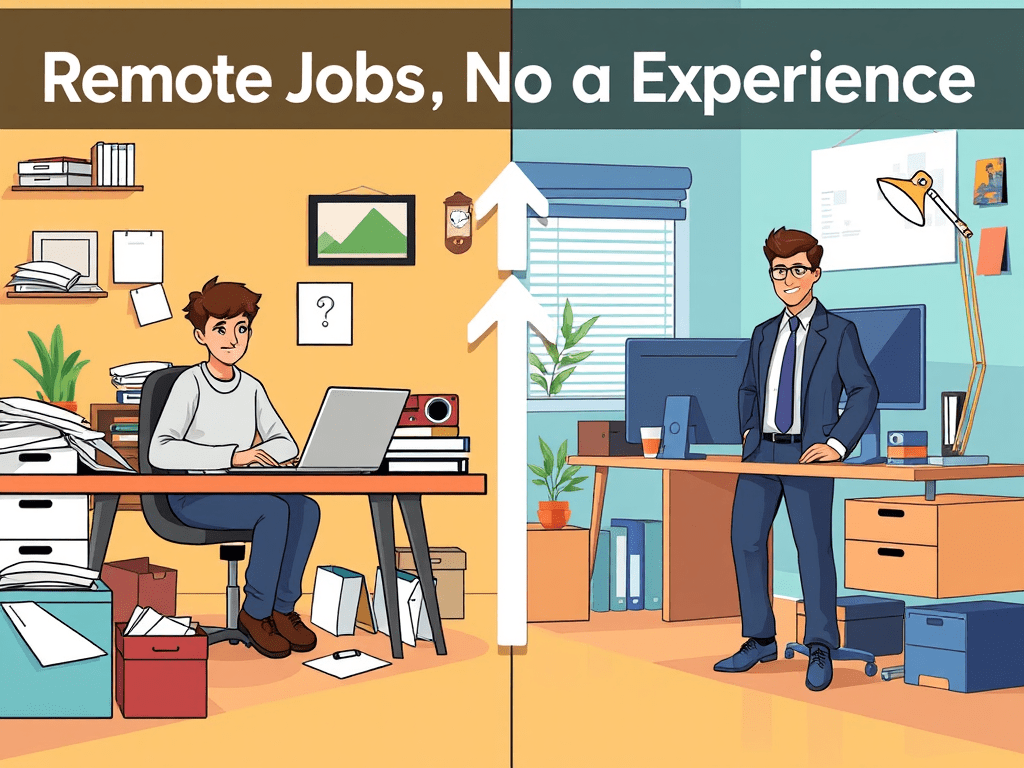
  • Remote Jobs No Experience

    Remote Jobs No Experience

    Hey there! 🌟

    Two years ago, I was scrolling through remote job boards at 2 AM, feeling completely defeated. Every posting seemed to want 3-5 years of experience, advanced certifications, or skills I’d never heard of. I had enthusiasm, a decent work ethic, and absolutely zero remote work experience to show for it.

    The worst part? I kept seeing the same advice everywhere: “Start freelancing to build your portfolio” or “Take on unpaid internships.” Easy to say when you need to pay rent next month, right?

    Then I met Marcus. He is a customer success manager. Marcus landed his first remote role just eight months after being laid off from retail management. No tech background. No fancy degree. No connections in his industry. Just a strategic approach to positioning himself as someone companies wanted to take a chance on.

    His story completely changed how I thought about breaking into remote work.

    The Truth About “No Experience” in Remote Work

    Here’s what Marcus taught me: When companies say they want “remote work experience,” they want candidates with varied remote backgrounds. They don’t want people who’ve only worked from home. They seek individuals who can work independently, communicate clearly, and deliver results without constant supervision.

    The problem isn’t that you lack experience. The issue is that you don’t know how to translate your existing skills into remote work language. Every job you’ve ever had has given you transferable skills. Every volunteer role has provided skills as well. Even managing your own life has contributed skills that remote employers desperately need.

    Companies hiring for entry-level remote positions care more about your potential and work style than your previous job titles. They just need proof that you can handle the unique challenges of working from home.

    4 Strategies to Position Yourself as Remote-Ready

    1. Audit Your Hidden Remote Skills

    You already have more remote-relevant experience than you think. Look for these transferable skills in your background:

    From any job:

    • Project management — Organizing events, coordinating schedules, meeting deadlines
    • Communication — Writing emails, presenting to groups, explaining complex topics
    • Problem-solving — Troubleshooting issues, finding creative solutions, working under pressure
    • Self-direction — Working independently, managing priorities, staying motivated

    From life experience:

    • Planning trips = project management and research skills
    • Managing household budgets = financial analysis and attention to detail
    • Coordinating family schedules = logistics and communication skills
    • Learning new hobbies = adaptability and self-directed learning

    Create a “skills inventory” document listing every capability you have, no matter how you gained it. This becomes your foundation for remote job applications.

    2. Build Proof of Remote Work Capabilities

    Since you can’t show remote work history, create evidence of remote work skills instead.

    Quick wins to demonstrate remote readiness:

    • Set up a professional workspace and take photos for your LinkedIn profile
    • Complete online courses relevant to your target roles (many are free)
    • Start a side project — blog, YouTube channel, small business, volunteer work
    • Document your self-directed learning through certificates, portfolios, or case studies
    • Practice video calls until you’re comfortable on camera

    Communication portfolio building:

    • Write LinkedIn posts about your learning journey
    • Create brief video introductions showcasing your communication skills
    • Offer to help local businesses with their social media or admin tasks
    • Join online communities in your field and contribute valuable comments

    3. Target Entry-Level Remote-Friendly Roles

    Some roles are naturally easier to break into remotely. Focus your search on positions that:

    High-demand, entry-level remote roles:

    • Customer service representative — Most companies offer training
    • Virtual assistant — Wide range of tasks, flexible skill requirements
    • Content moderator — Social media platforms constantly hiring
    • Data entry specialist — Detail-oriented work that’s easy to train
    • Online tutor or teacher — If you have expertise in any subject
    • Social media assistant — Great for digital natives
    • Sales development representative — Many companies train from scratch

    Industries actively hiring remote beginners:

    • SaaS and tech companies (customer success, support)
    • E-commerce businesses (operations, customer service)
    • Digital marketing agencies (assistant roles, content creation)
    • Online education platforms (support, community management)
    • Remote-first startups (various entry-level positions)

    4. Master the Remote Job Application Process

    Apply differently than you would for traditional jobs. Remote employers evaluate candidates through a different lens.

    Application strategy that works:

    • Customize every application — Show you understand their specific remote work challenges
    • Lead with your why — Explain your genuine interest in remote work beyond convenience
    • Address the experience gap directly — “While I’m new to remote work, I’ve demonstrated [specific skill] through [concrete example]”
    • Show initiative — Mention courses you’ve taken, tools you’ve learned, or preparations you’ve made

    Stand-out application elements:

    • Include a brief video introduction (30-60 seconds)
    • Create a simple portfolio website showcasing your skills
    • Write a thoughtful cover letter addressing their specific needs
    • Follow up professionally but not aggressively
    • Be prepared for skills-based assessments or trial projects

    Your 30-Day Remote Job Search Plan

    Week 1: Foundation Building

    • Complete your skills inventory
    • Set up your workspace and take professional photos
    • Update LinkedIn profile with remote work focus
    • Research 10 companies you’d love to work for

    Week 2: Skill Development

    • Enroll in 2-3 relevant online courses
    • Start a small project to showcase your abilities
    • Join industry-specific online communities
    • Practice video calls with friends or family

    Week 3: Application Preparation

    • Create your portfolio website or document
    • Write 3 different cover letter templates
    • Prepare for common remote work interview questions
    • Set up job alerts for entry-level remote positions

    Week 4: Active Job Searching

    • Apply to 10-15 positions per week
    • Follow up on applications from previous weeks
    • Network in online communities
    • Refine your approach based on responses

    Your Challenge This Week 🎯

    Choose one entry-level remote role that interests you and spend one hour researching:

    • What skills do job postings repeatedly mention?
    • What tools or software do they commonly use?
    • What challenges will someone in this role face?
    • How can you start building relevant experience now?

    Then take one concrete action toward building that experience. Sign up for a free course. Download the software to practice. Alternatively, reach out to someone doing that job for advice.

    What type of remote work are you most interested in pursuing? Are there specific skills you’re worried about not having, or companies you dream of working for?

    Hit me up in the comments and let me know. I love helping people navigate their path into remote work. Sometimes, an outside perspective can spot opportunities you might be missing.

    Here’s to proving that passion and preparation can open doors that experience alone will not.

    Talk soon, Tim

    P.S. Remember: every expert was once a beginner. The remote workers you admire today all started somewhere, and many of them started exactly where you are now. Your fresh perspective and eagerness to learn might be exactly what the right company is looking for. 🚀

    Get my Remote Work Job Search Checklist HERE

  • Dream Boards

    Dream Boards

    Hey there! ✨

    I used to roll my eyes at vision boards. They seemed like something you’d find between crystals and motivational quotes on Pinterest. They are pretty to look at. However, they are not practical for someone trying to build a real remote career.

    Then last January, I felt stuck in the same work-from-home rut. I’d been in this rut for months. I decided to give it a shot. What did I have to lose? I grabbed some old magazines, scissors, and a piece of poster board. I fully expected to create something cheesy. I thought it would end up in a closet within a week.

    Eight months later, I’ve redesigned my home office into a space that actually energizes me. I just booked three weeks in Italy for September. I will be working from cafes in Rome and taking client calls with the Tuscan countryside as my backdrop. That “someday” vision is finally going to happen! The dream board is still hanging above my desk, and honestly? It’s been one of the most practical tools I’ve ever used for my remote career..

    Turns out, there’s a big difference between wishful thinking and intentional visualization.

    Why Dream Boards Hit Different for Remote Workers

    Here’s what I discovered: Remote work is uniquely suited for dream board magic. It allows us to have complete control over our environment. We can also fully manage our schedule. Traditional office jobs constrain you with commutes, dress codes, and physical locations. In contrast, remote work lets you design your ideal life around your career.

    The challenge? With infinite possibilities comes decision paralysis. Without a clear vision of your desired remote work life, it’s easy to drift into a default routine. This routine can feel more like survival than thriving.

    A dream board for remote workers isn’t about manifesting a Ferrari (though if that’s your thing, go for it). It’s about getting crystal clear on the lifestyle, work environment, and professional goals that remote work can uniquely provide. Then, keep those visions front and center every single day.

    4 Essential Categories for Your Remote Work Dream Board

    1. Your Ideal Work Environment

    This section focuses on the physical and digital spaces where you do your best work.

    Include images of:

    • Dream home office setups — natural light, plants, inspiring artwork
    • Alternative workspaces — coffee shops, co-working spaces, outdoor settings
    • Technology and tools — that standing desk, good lighting, quality headphones
    • Organization systems — clean desks, beautiful storage, minimal setups

    The goal isn’t to create Pinterest envy. It’s to clarify what kind of environment makes you feel energized and focused, then work toward creating it.

    2. Lifestyle Integration Goals

    Remote work’s superpower is blending life and work in ways that serve you better.

    Visualize:

    • Flexible schedule benefits — morning workouts, school pickup, midday breaks
    • Travel and workations — that laptop-on-the-beach shot (if that’s actually appealing to you)
    • Family time — working from home while kids play, cooking lunch with your partner
    • Personal pursuits — the hobby you’ll have time for, the skills you want to develop

    This isn’t about work-life balance — it’s about work-life integration that feels authentic to you.

    3. Professional Growth and Income

    Get specific about where you want your remote career to go.

    Include:

    • Salary or revenue goals — actual numbers, not just “more money”
    • Skills you want to develop — certifications, courses, new technologies
    • Types of projects or clients — the work that excites you
    • Professional recognition — speaking at conferences, industry awards, thought leadership
    • Team and collaboration — the kind of colleagues you want to work with

    Remote work can sometimes feel isolating from career advancement. A dream board keeps your professional ambitions visible and actionable.

    4. Freedom and Flexibility Outcomes

    This is where you capture the “why” behind choosing remote work.

    Visualize:

    • Geographic freedom — living where you want, not where jobs are. For me that would be Italy. Great food, great people, great work life balance, the list goes on and on.
    • Time autonomy — controlling your schedule, peak productivity hours
    • Financial independence — emergency fund, investment goals, debt freedom
    • Reduced stress — no commute, comfortable clothes, pets nearby
    • Personal growth — the person you become when you’re not constrained by traditional work

    Creating Your Remote Work Dream Board

    Go Physical, Not Digital

    There’s something powerful about cutting, pasting, and touching your dream board. The physical process of creating it engages different parts of your brain than scrolling through Pinterest.

    Be Ruthlessly Specific

    Instead of generic “success” images, choose pictures that represent your exact definition of success. What does your ideal Tuesday look like? What time do you start work? What’s your workspace vibe?

    Include Process, Not Just Outcomes

    Add images that represent the habits and routines leading to your dream remote work life. This can include morning meditation, learning new skills, networking calls, and exercise breaks.

    Update Quarterly

    Your remote work dreams will evolve. Schedule quarterly dream board reviews to add new goals and celebrate achieved ones.

    Place It Where You’ll See It Daily

    This isn’t wall art. It’s a daily reminder system. Put it somewhere in your workspace where you’ll notice it regularly.

    Making Your Dream Board Actionable

    The Monthly Check-In

    Look at your dream board and ask:

    • What’s one small step I can take toward each category this month?
    • Which dreams feel closer than they did three months ago?
    • What obstacles am I facing, and how can I address them?

    Connect Dreams to Daily Actions

    For each major goal on your board, identify:

    • One daily habit that moves you closer
    • One weekly action you can take
    • One monthly milestone to aim for

    Celebrate Progress

    When you achieve something from your dream board, mark it with a gold star. You could also use a checkmark or move it to an “achieved” section. This positive reinforcement keeps the momentum going.

    Your Challenge This Week 🎯

    Create the foundation for your remote work dream board. You don’t need to finish the whole thing — just start:

    1. Gather materials: poster board, magazines, scissors, glue stick
    2. Spend 30 minutes cutting out images that represent your ideal remote work life
    3. Choose one category to focus on and create that section
    4. Put it somewhere you’ll see it tomorrow morning

    Don’t overthink it. The magic happens in the doing, not the planning.

    What does your dream remote work life actually look like? Not the Instagram version, but the real, specific, daily experience you want to create?

    Hit reply and tell me about one thing you’d definitely include on your dream board. I love hearing about people’s unique visions for their remote work life.

    Here’s to making the invisible visible and turning “someday” into “this year.”

    Talk soon, Tim

    P.S. If you create a dream board this week, tell me about it in the comments. There’s something incredibly inspiring about seeing other people’s visions come to life — plus, I’d love to cheer you on! 📸

  • Daily Routines of High-Performing Remote Workers

    Daily Routines of High-Performing Remote Workers

    Hey there! ⭐

    I used to think the most productive remote workers were the ones posting LinkedIn updates at 5 AM. They wrote about their “morning grind” and color-coded calendars. You know the type — up at dawn, green smoothie in hand, crushing goals before most people hit snooze.

    Then I actually started talking to people who consistently deliver exceptional work from home, and I was shocked. The highest performers I met weren’t necessarily early risers or productivity hackers. But they all had one thing in common: rock-solid daily routines that worked with their natural rhythms, not against them.

    Take CJ, a project manager who mentored me early in my remote work journey. I was struggling to fit into a traditional 9-to-5 schedule. I also felt guilty about my afternoon energy crashes. Meanwhile, CJ was quietly revolutionizing how I thought about productivity. He started work at 10 AM, took genuine lunch breaks, and wrapped up by 4 PM sharp. Yet his project delivery rate was unmatched, and his team consistently hit every deadline. His secret? He’d designed his remote work routines entirely around his peak energy windows instead of fighting against his natural rhythms.

    What High Performance Really Looks Like

    After studying dozens of top-performing remote workers, I made a surprising discovery. Success isn’t about having the “perfect” daily schedule when working from home. It’s about having consistent systems that create predictable outcomes.

    The most productive remote workers don’t wing it. They don’t rely on motivation or willpower. Instead, they’ve built productive habits remote workers can depend on, regardless of how they feel on any given day.

    These aren’t complicated systems or time-tracking apps. They’re simple, sustainable routines that create structure in an environment where structure doesn’t naturally exist.

    4 Essential Elements of High Performance Routines

    1. The Protected Morning Window

    Every high-performing remote worker I studied guards their first 1-2 hours fiercely. But here’s the twist: what they do during this time varies dramatically.

    Some common approaches:

    • The Early Bird: Up at 6 AM for exercise, journaling, and strategic planning
    • The Slow Ramp: Gentle morning routine with coffee, reading, and gradual work entry
    • The Power Start: Immediate dive into the day’s most important task
    • The Preparation Ritual: Review schedule, set intentions, organize workspace. This is my most important approach.

    The key isn’t the specific activity — it’s that this time belongs to them, not their inbox or urgent requests. High performers use this window to set their day’s tone rather than react to everyone else’s priorities.

    2. Strategic Deep Work Blocks

    Productive remote workers have figured out when their brain works best and ruthlessly protect those hours.

    How they structure focus time:

    • Time blocking: Dedicated 2-3 hour chunks for challenging work
    • Theme days: Mondays for strategy, Tuesdays for creation, etc.
    • Peak energy mapping: Scheduling hardest tasks during natural energy highs
    • Communication boundaries: Specific hours for emails/meetings vs. solo work. Simple and effective but somewhat elusive for some.

    They don’t try to do deep work all day. Instead, they identify their 3-4 peak hours and build their entire schedule around protecting them.

    3. Intentional Break Architecture

    This was the biggest surprise: high-performing remote workers are strategic about their breaks, not just their work time.

    Effective break patterns I observed:

    • Micro-breaks: 5-minute walks between tasks
    • Movement breaks: Stretching, yoga, or quick workouts every 2 hours
    • Nature breaks: Stepping outside, even briefly, during the day
    • Social breaks: Quick calls with colleagues or family members
    • Creative breaks: Playing an instrument, doodling, or other non-work activities

    They don’t see breaks as “time off” — they see them as fuel for sustained high performance.

    4. The Shutdown Ritual

    Every high performer has a clear end-of-workday routine that signals to their brain: “Work is done.”

    Common shutdown elements:

    • Task capture: Writing down tomorrow’s priorities. I personally look at the next days schedule to help with this.
    • Workspace clearing: Organizing desk and closing programs. In my case, I collect all my post it notes and doodles.
    • Transition activity: Exercise, cooking, or family time
    • Gratitude practice: Reflecting on the day’s wins. I record these for my weekly summary to my boss.
    • Physical boundary: Closing laptop, leaving office, changing clothes. Most days I head right to my garage to grab my lawn mower, of pull some weeds. Its all about clearing my head.

    This isn’t about stopping at a specific time (though many do). It’s about creating a clear psychological transition from work mode to personal mode.

    Building Your High Performance Routine

    Start With Your Energy, Not Your Schedule

    Before you design your routine, track your energy for one week:

    • When do you feel most alert and creative?
    • What time of day do you naturally start to fade?
    • When are you most easily distracted?
    • What activities give you energy vs. drain it?

    Use this data to design your ideal daily structure.

    Design Your Non-Negotiables

    High performers typically have 3-5 non-negotiable elements that happen every workday:

    • A specific morning routine (even if it’s just 10 minutes)
    • One protected deep work block
    • A real lunch break away from screens. I have it blocked off in my calendar yet people still send meeting requests 😱
    • Some form of movement
    • A clear work shutdown

    Start with just 2-3 elements and build from there.

    Create Flexibility Within Structure

    The best remote work routines have consistent frameworks but flexible details. For example:

    • Always exercise in the morning, but vary the activity
    • Always have a shutdown ritual, but adjust timing based on workload
    • Always protect deep work time, but shift the hours as needed

    Test and Adjust Weekly

    High performers treat their routines like experiments. They try something for a week, assess how it felt, and make adjustments. They’re not married to any particular approach — they’re married to the process of continuous improvement.

    Your Challenge This Week 🎯

    Pick one element from the high performance routines and commit to testing it for five days:

    • Design a 15-minute morning routine
    • Block out 2 hours for deep work daily
    • Take three intentional breaks each day
    • Create a simple shutdown ritual

    Don’t try to overhaul your entire day. Just experiment with one piece and notice how it affects your energy, focus, and overall satisfaction with your work.

    What does your current remote work routine look like? Are there patterns that serve you well, or areas where you feel like you’re constantly playing catch-up?

    Hit me up in the comments — I’m curious about what routines you’ve tried and what’s worked (or hasn’t worked) for you.

    Here’s to building systems that make success feel less like luck and more like inevitability.

    Talk soon, Tim

    P.S. Remember: the best routine is the one you’ll actually stick to. Don’t aim for perfection — aim for consistency. Small, sustainable changes compound into remarkable results over time. 🚀

  • Freelance vs Remote Employment: Which One’s Right for You?

    Freelance vs Remote Employment: Which One’s Right for You?

    Freelance vs Remote Employment: Which One’s Right for You?

    Hey there! 👋

    Six months ago, I was sitting at my kitchen table, staring at two job offers. One was a traditional remote position with a consulting company—good salary, benefits, the whole package. The other was a freelance opportunity that would double my hourly rate but came with zero guarantees and zero benefits.

    I spent two weeks agonizing over the decision, calling every mentor I knew, and making endless pros and cons lists. The choice felt impossible because both paths seemed equally appealing and terrifying.

    If you’re reading this, you’re probably in a similar spot. Maybe you’re tired of the corporate world and dreaming of freelance freedom. Or perhaps you’re a freelancer who’s curious about the stability of remote employment.

    Here’s what I wish someone had told me back then.

    The Real Difference Between Freelance and Remote Work 🤔

    Here’s the thing most people don’t realize: Both freelancing and remote employment involve working from home. However, they are completely different lifestyles.

    Remote employment is like having a traditional job, just without the commute. You have a boss, regular hours, team meetings, and a predictable paycheck. In 2024, 52% of Gen Z professionals took on freelance work. This shows that younger workers are increasingly choosing alternative work arrangements.

    Freelancing is running your own business. You’re the CEO, the sales team, the accountant, and the service provider all rolled into one. The percentage of independent workers serving other businesses rose to 11.2 million in 2024, a 14% increase from previous years, indicating strong demand for freelance services.

    Neither path is inherently better—they’re just different solutions to different problems.

    Four Key Factors to Consider

    After talking to dozens of people who’ve made this choice (and living both sides myself), here are the factors that matter most:

    1. Financial Stability vs. Income Potential

    Remote employment offers predictable income, benefits, and paid time off. You know exactly how much you’ll earn each month. You don’t have to worry about finding your next client. In most cases, you don’t have to worry about your workload either.

    Freelancing can be more lucrative—many freelancers earn 2-3x what they made as employees. But income is unpredictable. You might have a $15K month followed by a $3K month.

    Best for freelancing: You have 6-12 months of expenses saved and can handle income fluctuations.

    2. Control vs. Structure

    As a remote employee, your days are largely structured for you. You have meetings, deadlines, and clear expectations. This can be comforting if you thrive with external accountability. Personally, I love having security.

    Freelancing gives you complete control over your schedule, clients, and projects. But that freedom comes with the responsibility of self-management and business development.

    Best for freelancing: You’re self-motivated and comfortable with ambiguity.

    3. Skill Development vs. Specialization

    Remote jobs often expose you to different projects and learning opportunities within a company. You might develop leadership skills, learn new technologies, or gain industry expertise.

    Freelancing forces you to become highly specialized in your core skills while also learning business skills (sales, marketing, client management).

    Best for freelancing: You have a marketable skill and enjoy wearing multiple hats.

    4. Work-Life Balance Reality Check

    Remote employment typically offers clearer boundaries. When you log off, you’re done. Many companies are also improving work-life balance policies.

    Freelancing can blur boundaries more. You’re always “on” for business development, and the pressure to take every opportunity can lead to overwork.

    Best for freelancing: You’re comfortable setting your own boundaries and saying no to work.

    Your Challenge This Week 🚀

    Before making any major decisions, try this exercise:

    Write down your answers to these three questions:

    1. What does your ideal workday look like, hour by hour?
    2. How much financial risk can you realistically handle?
    3. What energizes you more: diving deep into one company’s problems or solving diverse challenges for multiple clients?

    Your answers will reveal which path aligns better with your personality and life situation.

    I’m curious—what’s drawing you toward freelancing or remote employment? What’s your biggest fear about making the switch?

    Hit reply and share your thoughts. I love hearing about people’s career decisions. Sometimes, talking through it with someone who’s been there can help clarify your thinking.

    Whatever you choose, you’ve got this, Tim.

    P.S. That decision I mentioned? I ultimately decided to stay put for now. The freelance opportunity was tempting, but I realized I needed more financial stability at this point in my life. But I know plenty of people who tried freelancing and loved it. I also know others who returned to remote employment because it wasn’t the right fit. Both choices can lead to amazing careers—it’s just about finding what works for your brain and your life.